

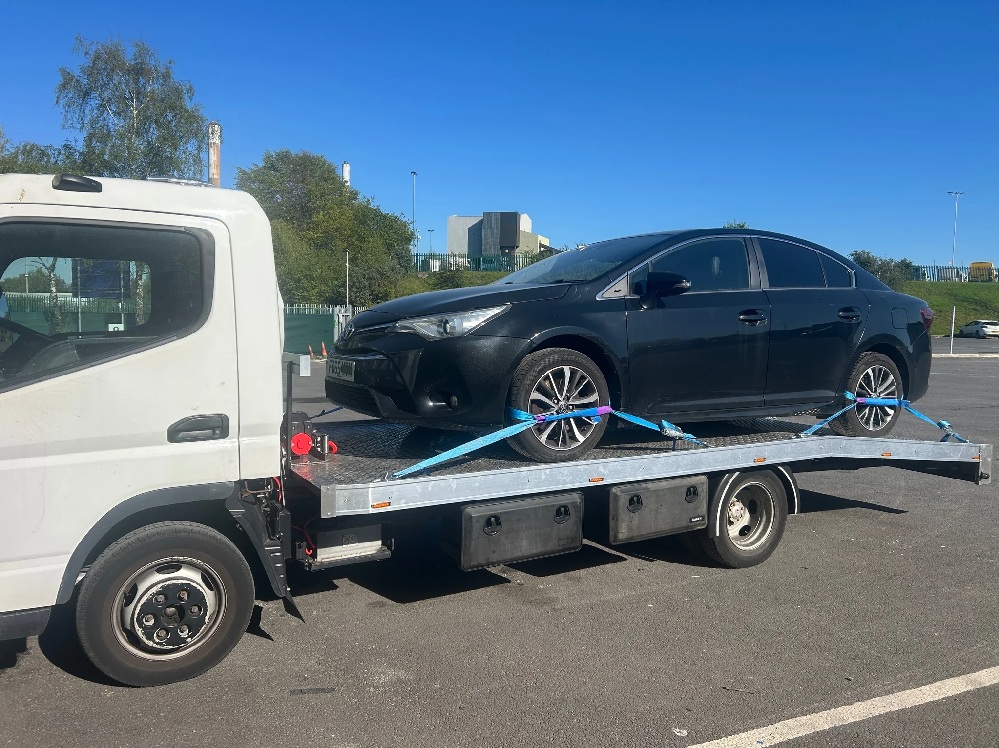

A buyer arrives at a closed yard gate with a paid-for car inside and no collection reference in hand. The driver cannot load anything, and the trip is wasted. Good auction transport planning prevents scenes like this by sorting what people believe from what is true.
This guide goes through seven common myths about moving a car away from an auction. Each one gets a plain answer. The aim is to help private buyers, traders, collectors and fleet managers avoid costly surprises, whether the car runs or not. Where a point comes from a company’s own website, the text says so.
Myth 1: You can just drive your new car home
Fact: often you cannot, and sometimes you must not. A car bought at auction may have no MOT, no tax or no insurance in your name. Driving an untaxed or uninsured car on a public road is illegal. A car without a valid MOT can only be driven in narrow cases, such as to a pre-booked test.
Even a car that looks road ready carries risk. You know little about its recent history. A worn tyre, a weak battery or a warning light can turn a short trip into a breakdown on the M6. A car on a transporter avoids all of that.
Insurance is the other gap. If the car has no cover, you cannot legally drive it, even for a short trip. Buying a policy for a car you have not seen yet is also awkward. A transporter removes both problems, because the car never touches the road under its own power.
Some auction cars have no keys at all. Others have engine failure or accident damage. Those vehicles cannot be driven anywhere, so a truck is the only real option.
Myth 2: Non-runners and damaged cars are too awkward to move
Fact: moving a car that will not start is routine work for a recovery firm. The right equipment makes the difference. A truck with a winch pulls a dead car up the ramp without anyone pushing it. That protects the bodywork and the underside from further damage.
The company behind one local auction page lists the types of vehicle it moves from auctions. The list includes non-runners, accident-damaged cars, Category S and Category N cars, salvage vehicles, cars without keys and cars with engine failure. The company also says it moves classic, vintage, performance, luxury and low-clearance cars, secured with straps and wheel restraints.
Two terms need a short explanation. Category S means a car has structural damage that was repaired or could be. Category N means the damage was not structural. Both can appear in auction listings. A buyer should ask the transport firm about them before booking, because a damaged car may need extra loading time.
One more point helps salvage buyers. A repairable car often needs to reach a garage or a body shop in the same state it left the yard. Loading it properly keeps the damage as listed, so the repair estimate stays accurate. Poor handling can add new dents or bent parts, and those change the repair bill.
Myth 3: You have to be at the auction yourself
Fact: you do not, as long as the paperwork is in order. Many buyers live far from the yard, work during auction hours or buy online. A transport company can attend on your behalf. Most auction houses release a car only after payment clears and the right collection reference is shown.
That reference matters. Without it, a driver turns up and goes home empty. Before you book, collect these details and keep them together:
- The auction house and the yard location
- The lot number or collection reference
- The make, model and registration of the car
- Proof that you have paid for the vehicle
- Any collection deadline set by the auction
- The delivery address and who will receive the car
The same auction page describes a five-step process. The buyer sends the auction name, vehicle details and collection reference. The company quotes. It then attends the site and completes the required procedures. The vehicle is inspected, loaded and secured. Delivery follows, and completion is confirmed. That order is a useful model for any provider.
Myth 4: Storage fees are small, so there is no rush
Fact: most auction houses give buyers a short free window to collect. After that, daily storage charges start. Each auction sets its own deadline and rates, so the terms in your buyer paperwork are the only figures that count.
Here is a hypothetical example. A buyer in Walsall wins a damaged hatchback at an auction yard on a Thursday. The free collection window closes on Monday. The buyer works weekdays and has no trailer. Booking auction transport on Thursday evening gets the car moved by Friday or Saturday. Booking on Tuesday risks the first day of storage charges. The scenario is invented, but the pattern is real.
Storage is not the only cost of delay. A car left in a yard is exposed to weather and handling. Some yards also limit collection hours, which can leave a buyer stuck over a weekend. Quick collection avoids storage fees, which is why trade buyers book transport before the auction even ends.
Speed has to be real, though. The same company states on its own pages that collection within the West Midlands is often same day or next day. It also says it operates around the clock. Those are the company’s claims, and any buyer should confirm a collection time in writing when booking. Nobody should treat a general promise as a fixed slot.
Myth 5: Any transporter will do the same job
Fact: providers differ in ways that matter on the day. Three points deserve a direct question.
Insurance
Do not assume your own motor policy covers a car while it rides on a truck. Ask whether the firm holds goods in transit cover and public liability cover, and ask to see the details. The auction collection and delivery page from Roumans Recovery says vehicles are covered by both and describes the business as licensed and insured. Its FAQ also says the buyer does not need insurance before transport. Read that as the company’s statement of its own terms, and check it against any quote.
Auction experience
Each yard has its own gate rules, opening times and check-in steps. A driver who knows the yard moves faster. The page names Copart, BCA, Manheim and Wilsons Auctions among the sites it collects from, along with independent auction sites. Always confirm the exact yard for your lot.
Handling method
Ask how the car will be loaded and secured. A firm that inspects the car before loading protects both sides. Photos at pickup give you a record of the car’s condition when it left the yard.
Myth 6: A transport quote is the same for every car
Fact: price follows the job, and the job changes with each car. The firm’s page lists the factors it uses. Each is common across the industry:
- Distance between the auction yard and the delivery address
- Vehicle size and weight
- Whether the car runs or not
- How urgent the collection is
- The delivery location
A small hatchback moving a few miles costs less than a heavy van moving a long way. A non-runner can add time at the yard, because it needs winching and careful loading. The company says it gives quotes with no hidden charges, so the customer knows the cost before transport. This article gives no prices, because they depend on the details above.
A fair way to compare quotes is to give every firm the same information. Share the auction, the lot, the car type, its condition and the delivery address. Then compare what each quote includes, not only the total.
Myth 7: Auction transport is only for motor traders
Fact: traders are heavy users, but they are far from the only ones. A private buyer who wins a project car faces the same problems as a dealer, with less experience of the process. A classic car collector wants careful handling more than speed. Insurance companies and fleet operators move vehicles in numbers.
The company page also lists private buyers, motor traders, classic car collectors, salvage buyers, insurers and fleet operators as its customers. It also mentions bulk movements, trade stock transfers and auction-to-dealership delivery. Multiple collections can be booked together, which dealers often do.
Coverage matters too. The page lists Bilston, Wolverhampton, Dudley, Darlaston, Tipton, Sedgley, Coseley and Walsall as areas it covers. It names the M6, M5 and M42 as its main routes, and says it also does long-distance transport across the UK. A buyer elsewhere should still confirm the route before relying on it.
How to book without the usual surprises
The myths above lead to a short plan. Follow these steps in order:
- Read your auction terms and note the free collection window.
- Gather the lot reference, payment proof and delivery address.
- Ask each firm about insurance, yard experience and loading method.
- Request a written quote based on the car’s real condition.
- Confirm the collection time, then confirm delivery once it is done.
Keep your expectations realistic. A transport firm cannot change auction rules, and it cannot collect a car that has not been paid for. What it can do is remove the risk of driving an unknown car home, and it can keep your fees down by moving fast.
Three Questions to Ask Before You Book
The best time to sort out auction transport is before the auction, not after it. A buyer who knows the yard, the deadline and the likely cost can bid with confidence. A buyer who does not often pays storage fees and rushed prices.
Three questions cover most of the risk. What does the auction charge once the free window ends? What does the transporter’s insurance cover while the car is on the truck? Which reference does the driver need at the gate? Get each answer in writing. The five-step process on the Roumans Recovery page gives a handy checklist to hold any quote against.