


Bridal hair and makeup London brides book is a styling service for the wedding day. A trained artist prepares the bride’s skin, face and hair so that she looks polished in person and in photos from the morning until the evening. It usually covers more than one visit and more than one task. This guide explains the parts, the words artists use and the choices a first-time bride will face.
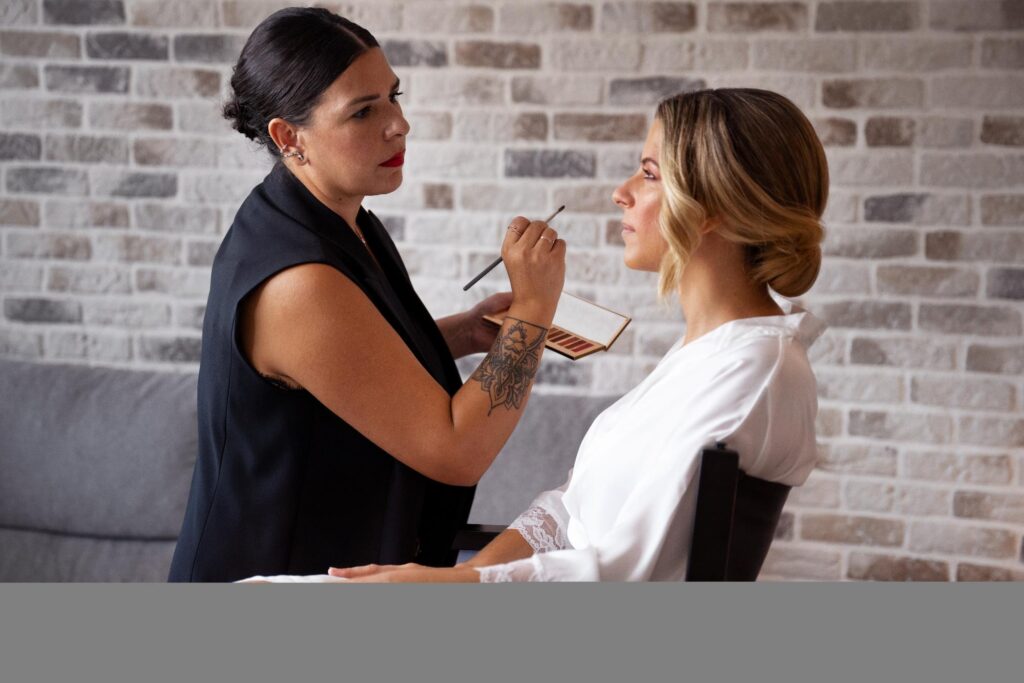
The core service in plain terms
The service has two halves. Makeup covers skin preparation, base, eyes, brows, cheeks and lips. Hair covers the style itself, the products that hold it and any accessories that go in, such as pins, a veil or a headpiece.
The two halves are planned together. The hairstyle affects what makeup suits the face, and the makeup affects which hairstyle feels balanced. That is why many brides book one artist for both, or ask two artists to coordinate.
Words you will hear, and what they mean
New brides often meet unfamiliar terms. The table below explains the most common ones.
| Term | What it means |
| Trial | A practice session before the wedding to test the full look |
| Skin prep | Cleansing and moisturising before makeup goes on |
| Base | Foundation and concealer that even out skin tone |
| Setting | Powder or spray that helps makeup last |
| Updo | A style with the hair pinned up off the neck |
| Half-up | Part of the hair pinned up, the rest worn down |
| Touch-up kit | Small items kept for fixes during the day |
If an artist uses a word you do not know, ask. A good artist will explain it in a sentence.
Before the wedding: the consultation and the trial
Most bookings start with a conversation. The artist asks about the date, the venue, the dress, the colours of the day and the look you have in mind. Then comes a trial, if one is offered.
The trial is the most useful step for a beginner. It lets you see the look on your own face, check how it feels and make changes. Bring photos of looks you like, a picture of your dress and any hair accessories. After the trial, take photos in daylight and indoors, then look at them a few hours later to see how the makeup wears.
Not every artist offers a trial in every package. Ask what is included before you book.
On the morning: what happens, step by step
The wedding morning follows a rough order. The details depend on the artist and the day, so treat this as a general model.
- The artist arrives and sets up near a window with good light.
- Skin prep begins, followed by the base.
- Eye, brow and cheek work comes next.
- Lips are done last, so they stay fresh.
- Hair is styled, and accessories are fitted.
- The artist checks both halves against the dress and leaves touch-up items.
Some artists style hair first and makeup second. Others reverse it. Ask which order is planned and how long each step takes.
Cultural and traditional looks
Bridal styling is not one fixed look. Traditions around the world use specific colours, jewellery, headpieces and techniques. A bride planning an African traditional or Indian traditional ceremony will want an artist with direct experience of those styles.
The services page of a London freelance hair and makeup artist states a specialization in African traditional bridal makeup and Indian traditional bridal makeup, and the homepage lists bridal hair and makeup among the artist’s services. That is the type of statement a bride can look for. After reading it, she should still check the portfolio for matching work, because a stated specialty is worth confirming with photos.
Choosing a hairstyle that fits the day
Hair is a big part of the bridal look. Three questions guide the choice. How long and thick is your hair? What will you wear in it, such as a veil, tiara or flowers? How long must the style last?
A full updo suits a formal ceremony and a long veil. A half-up style keeps length and movement. Loose waves feel relaxed but may need more care in wind. Bring your accessories to the trial, because the style is built around them. Tell the artist how your hair behaves on a humid day or after a few hours, since this affects the products and pins they choose.
How early should you book?
Book as soon as the date and venue are fixed. For bridal hair and makeup London venues host in peak months, such as summer Saturdays, good artists fill their diaries early. A freelancer can take only one wedding at a time, so a taken date is simply gone.
Booking early also makes time for a trial, a menu of look options and a calm conversation instead of a rushed one. Many brides find that the weeks after booking are the best time to collect photos and refine ideas.
What affects how long the makeup lasts
Wedding makeup has to last many hours, through photos, hugs, food and possibly tears. Four factors matter most.
- Skin type: oily, dry and combination skin each need different prep.
- Weather: heat, humidity and wind all change how a look holds.
- Products: long-wear formulas and setting products help.
- Touch-ups: a few items in a small bag make a large difference.
Ask the artist how they build for a long day and what they leave in your kit.
What to prepare at home
A little preparation makes the morning smoother. Keep skincare simple in the weeks before the wedding. Do not try new products close to the date, because a reaction would be hard to fix. Wash and dry your hair as the artist advises. Have your accessories, veil and dress nearby, and clear a small space with good light.
Eat breakfast. It sounds minor, but a long morning of styling goes better when the bride is not hungry.
The bridal party
Bridesmaids, mothers and other guests may also want hair or makeup. Tell the artist early, because each person adds time. An artist working alone needs a schedule that starts early enough to finish the bride last, so she looks freshest at the ceremony.
Agree the order of people in advance. Share the time of the ceremony and the time of the first group photo. The artist can then work backward to a realistic start.
Questions to ask before you book
A short list helps a first-time bride compare artists fairly.
- Is my date available?
- Does the price include hair, makeup or both?
- Is a trial included, and when can it happen?
- Does the artist travel to the venue, and are there travel costs?
- How many people can be done in the morning?
- What are the cancellation and rescheduling terms?
Some artists share enquiry hours on their website. One London freelancer’s homepage gives daily hours from 7.00am to 10.00pm for contact. That tells you when to expect replies. It does not replace a confirmation of your date.
Putting it together
Bridal hair and makeup London couples plan for is simply a package of preparation, styling and timing. Once you know the parts, the choices become easier. Decide what you need, ask for a trial, share your photos and timings, and confirm everything in writing.
First-time brides sometimes worry that they do not know enough to book well. The questions in this guide are enough to start. A calm, organised conversation with the artist will fill in the rest.