

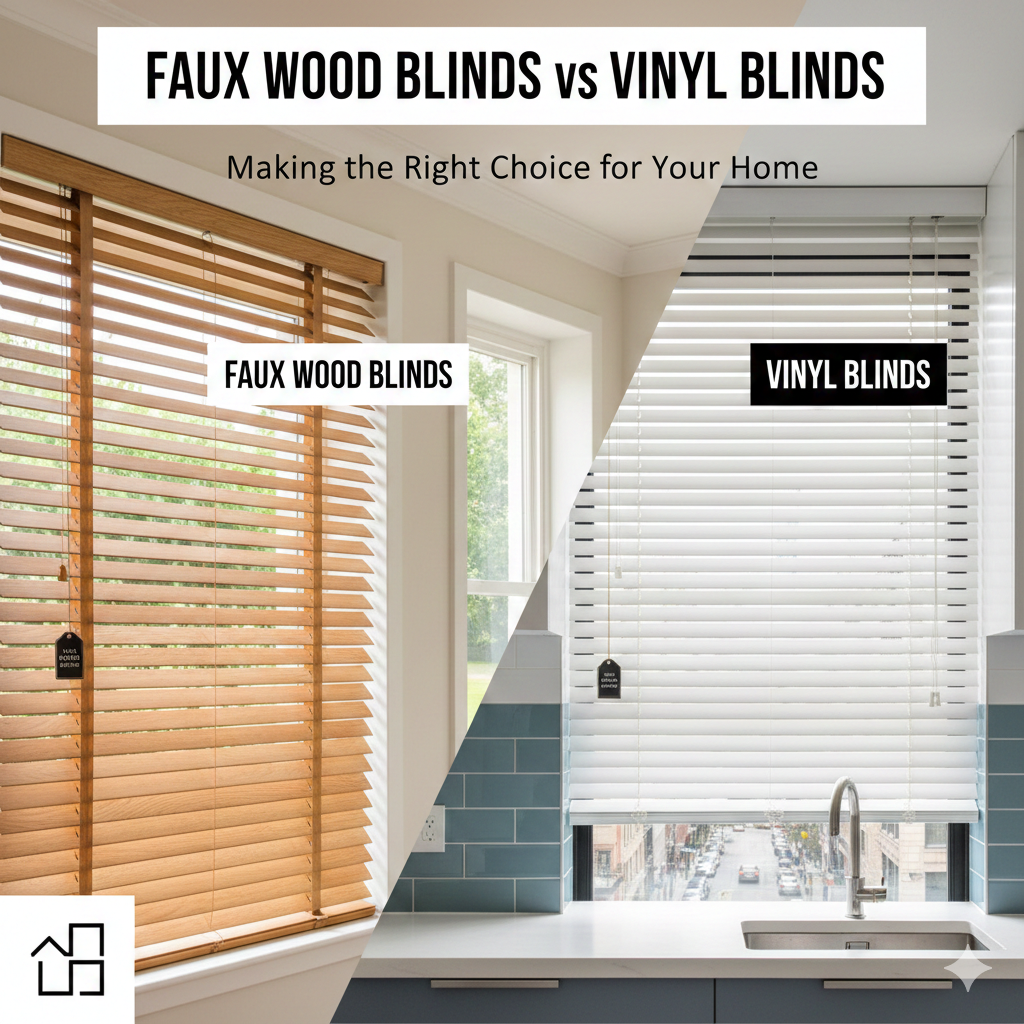

Choosing the right window blinds affects comfort, privacy, and style. Many homeowners compare two popular options before making a decision. These are faux wood blinds and vinyl blinds. At first glance, they may look similar. In reality, their performance and value differ in important ways.
This guide explains the key differences. It focuses on materials, durability, appearance, cost, and daily use. The goal is to help homeowners choose the best option for their space.
Understanding Faux Wood Blinds
Faux wood blinds are designed to mimic real hardwood. They are usually made from PVC or composite materials. This construction gives them strength and stability. The slats are thicker than most vinyl options. That thickness improves durability and insulation.
Many homeowners choose blinds because they offer a premium look without the price of real wood. They work well in both modern and traditional interiors. Living rooms, dining rooms, and bedrooms are common placements.
Another advantage is moisture resistance. Unlike real wood, wood blinds do not warp or crack in humid conditions. This makes them suitable for kitchens and bathrooms.
Understanding Vinyl Blinds
Vinyl blinds are lightweight and affordable. They are made from flexible PVC materials. These blinds are commonly found in rental properties, offices, and utility spaces.
Vinyl blinds usually have thinner slats. This makes them easier to bend or break. They are available in limited colors and styles. White is the most common option.
While vinyl blinds are easy to install, they are not designed for long-term use. They are best for low-budget or temporary solutions.
Material and Build Quality Comparison
Material quality is the biggest difference between the two options. Wood blinds have thicker slats and a solid structure. They feel sturdy when opened or closed. Vinyl blinds feel lighter and more flexible.
Over time, vinyl slats may bend or discolor. Faux wood slats hold their shape better. This difference becomes clear in high-traffic homes.
For homeowners looking for reliability, blinds offer stronger construction and longer lifespan.
Appearance and Design Impact
Design plays a major role in window treatments. Wood blinds provide a realistic wood texture. They add depth to a room. Many finishes are available, including white, gray, and natural wood tones.
This makes blinds suitable for formal and casual spaces. They complement furniture and flooring easily. Faux wood blinds for windows often create a clean and finished look.
Vinyl blinds have a flat appearance. They lack texture and visual warmth. This limits their use in design-focused interiors. They are better suited for garages or storage areas.
Moisture Resistance and Room Suitability
Both options handle moisture better than real wood. However, blinds perform better over time. They resist warping even in high humidity.
Bathrooms and kitchens benefit from this durability. Blinds maintain their shape near sinks and windows exposed to steam.
Vinyl blinds also resist moisture but may become brittle with heat exposure. In sunny or humid rooms, this can shorten their lifespan.
Light Control and Privacy
Light control depends on slat thickness and fit. Blinds provide better room darkening. Their thicker slats block more light when closed.
They also offer better privacy. Gaps between slats are smaller. This reduces visibility from outside.
Vinyl blinds allow more light leakage. Their thin slats may bend, creating uneven gaps. This can affect both privacy and comfort.
Insulation and Energy Efficiency
Insulation is often overlooked. Blinds provide better thermal performance. Their thicker slats help reduce heat transfer.
This can keep rooms cooler in summer and warmer in winter. Over time, this supports energy efficiency.
Vinyl blinds offer minimal insulation. They do not provide the same temperature control benefits.
Safety and Cordless Options
Modern homes prioritize safety. Cordless designs are now standard for many window treatments. Faux wood blinds are widely available in cordless styles.
Cordless wood faux blinds improve safety for children and pets. They also offer a cleaner appearance. Operation is smooth and simple.
Vinyl blinds may offer cordless options, but the mechanisms are often less durable. Over time, they may lose tension or alignment.
Maintenance and Cleaning
Both options are easy to clean. A damp cloth or duster works well. Blinds resist staining and scratches better.
Vinyl blinds may attract dust due to static. They can also yellow over time. This affects appearance and requires replacement sooner.
For homeowners seeking low maintenance, blinds are a better long-term solution.
Cost and Long-Term Value
Vinyl blinds are cheaper upfront. This makes them appealing for tight budgets. However, replacement costs add up over time.
Faux wood blinds cost more initially. Yet they last longer and maintain their appearance. Many homeowners see better value over years of use.
Blinds for windows often balance cost and quality effectively. They provide a premium look without premium pricing.
Choosing the Right Option for Your Home
The best choice depends on your goals. If budget is the only concern, vinyl blinds may work short term. For durability, style, and comfort, faux wood blinds are the stronger option.
Homeowners who care about design, insulation, and longevity usually prefer blinds. They adapt well to different rooms and conditions.
Faux wood blinds offer a balance of performance and appearance that suits most residential needs.
Final Thoughts
Window blinds are more than functional coverings. They influence comfort, energy use, and interior style. Comparing wood blinds and vinyl blinds highlights clear differences. Faux wood blinds deliver better durability, appearance, and long-term value. Vinyl blinds remain a basic solution for limited use cases. By understanding these differences, homeowners can make confident decisions that support both comfort and design.