

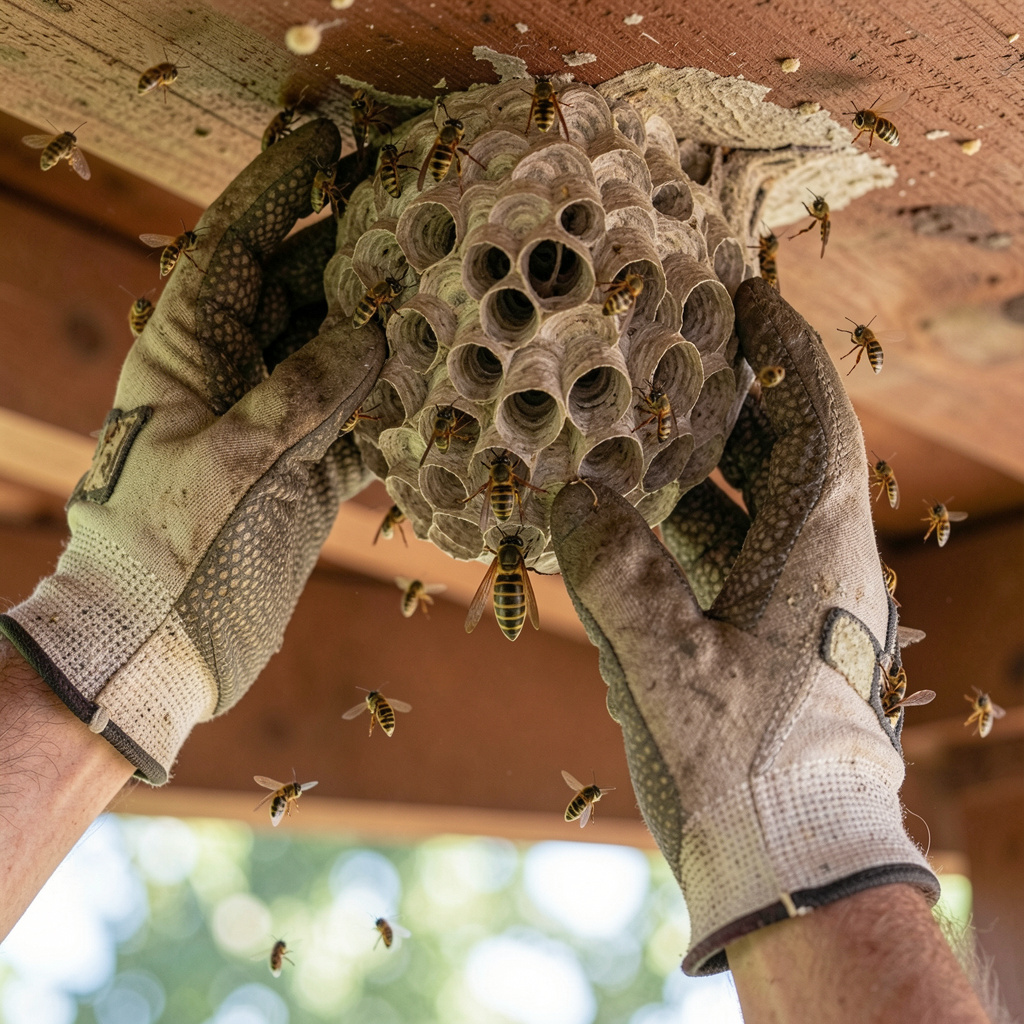

Wasps are a common sight around homes in Katy, Texas. The warm weather gives them plenty of time to stay active. They often build nests near homes, yards, garages, and outdoor spaces. A small nest may seem harmless at first. However, it can grow and become a safety concern.
Many homeowners do not notice a nest until wasp activity increases around their property. Wasps may fly near doors, patios, rooflines, and play areas throughout the day. When this activity continues, wasp nest removal in Katy TX can become important for protecting the home and the people around it. Understanding why wasps choose Katy properties can also help homeowners respond sooner.
Katy’s Warm Climate Supports Wasp Activity
Katy has long periods of warm weather. These conditions can support wasp activity for much of the year. As temperatures rise, queens search for protected places to start new colonies.
Spring and summer are especially active periods. Food and water are easier for wasps to find. Gardens, flowering plants, insects, trash cans, and outdoor meals can attract them.
As a colony grows, more worker wasps leave the nest. This is often when homeowners first notice a problem. Early wasp nest removal can help prevent a small issue from becoming harder to manage.
Katy Homes Offer Many Nesting Locations
Wasps look for places that provide shelter from weather and other threats. Unfortunately, homes offer many suitable nesting spots.
Rooflines and Eaves
Roof eaves are common nesting areas. They provide shade and protection from rain. Wasps may also build nests under gutters, overhangs, and porch ceilings.
These nests can be difficult to notice from the ground. Professional wasp nest removal may be needed when the nest is high or hard to reach.
Attics and Wall Voids
Small openings around a house can allow wasps to enter hidden spaces. They may move through gaps near vents, siding, roofs, or utility lines.
A hidden nest can be more complicated than an exposed one. Homeowners should avoid sealing an active entry point without knowing where the insects are nesting. Safe wasp nest removal starts with finding the nest and identifying the wasp species.
Sheds, Fences, and Outdoor Areas
Wasps do not only nest on the main house. Sheds, fences, play structures, patio covers, and outdoor storage areas can also attract them.
These locations can bring people close to an active colony. This makes proper wasp nest removal important, especially when children or pets use the area.
Food and Water Can Attract Wasps
Katy homeowners often enjoy patios, pools, gardens, and backyard meals. These outdoor spaces can also provide resources for wasps.
Sweet drinks, fruit, uncovered food, pet bowls, and open trash containers may attract certain species. Wasps also hunt other insects for food.
Pools, dripping faucets, birdbaths, and standing water can provide moisture. Removing these attractions will not always eliminate an established colony. However, it can support wasp nest removal and prevention efforts.
Wasp Nests Can Grow Quickly
A nest may begin with only a queen. Over time, she produces workers that help expand the colony. The nest can then become larger as the season continues.
More workers usually mean more activity around the property. Homeowners may notice wasps traveling along the same flight path.
Finding the problem early can make wasp nest removal easier. Waiting may allow the colony to become larger and more defensive.
Why DIY Removal Can Be Risky
Seeing a visible nest may tempt a homeowner to knock it down or spray it. This approach can be dangerous.
Wasps can defend their colony when they feel threatened. Some species can sting more than once. Disturbing a nest may cause several insects to react at the same time.
Ladders add another risk. A person who is startled by wasps can lose balance while trying to reach a high nest. Professional wasp nest removal helps reduce these unnecessary risks.
Signs You May Have a Wasp Nest
A few wasps around flowers do not always mean there is a nest nearby. Repeated activity in one area deserves more attention.
Common warning signs include wasps repeatedly entering the same wall opening, gathering under an eave, or flying around one structure. You may also see a visible paper-like nest.
Watch the insects from a safe distance. Do not block their entry point or disturb the colony. An expert can inspect the area and decide how wasp nest removal should be handled.
How Homeowners Can Reduce Future Wasp Problems
Prevention begins by making the property less inviting. Homeowners can seal small exterior gaps after confirming they are not active nest entrances. Trash cans should remain covered, and food should not sit outside longer than needed.
Regular checks around eaves, garages, sheds, and patios can also help. Finding a developing nest early allows wasp nest removal to happen before the colony becomes larger.
Homeowners should also repair damaged screens and address openings around siding or roof areas. These simple steps can reduce possible nesting sites.
Conclusion
Wasps are part of the Texas environment, but an active nest near your family can create problems. Katy’s warm climate, available food, water, and sheltered structures give wasps many places to thrive. Timely wasp nest removal can help homeowners address colonies before activity increases.
If you are searching for a wasp nest removal service near me, choose a professional who understands local wasp behavior and common nesting locations. Raul The Bees Guy provides wasp nest removal in Katy TX for homeowners dealing with unwanted nests around their properties. Professional help can identify the problem, address the nest safely, and help you understand ways to reduce future wasp activity.