

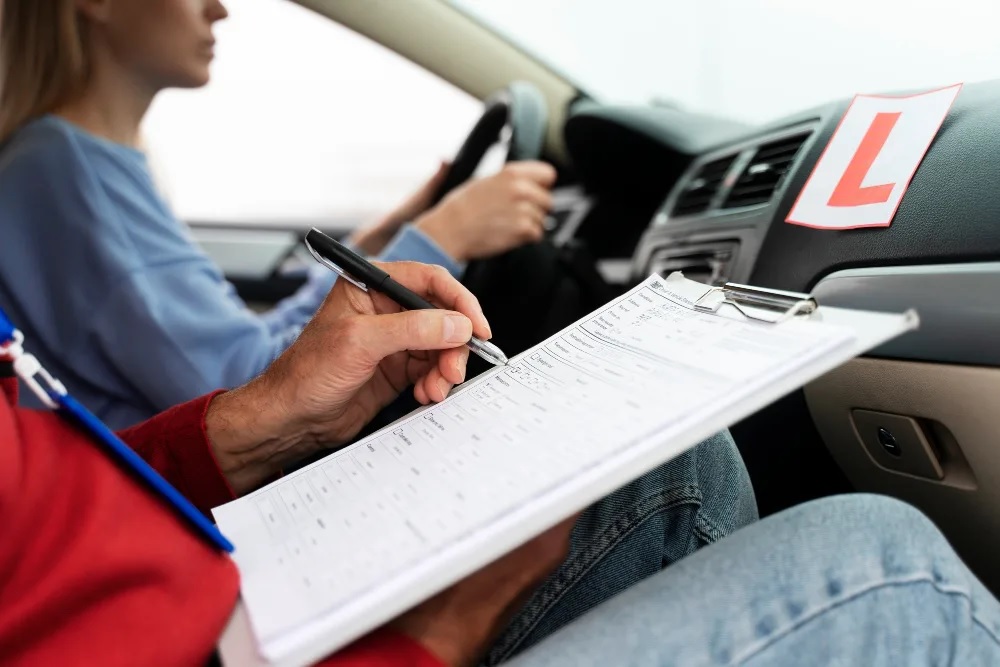

Essential Driver Training, better known as EDT, is mandatory for new learner drivers in Ireland. It’s delivered by RSA-approved instructors in dual-control vehicles. It’s structured as a set of 12 lessons, not a loose series of driving sessions. Here’s how EDT driving lessons in Dublin typically progress, from a first-timer’s opening lesson through to test readiness.
Phase 1: Building the Fundamentals
The first few lessons focus on the basics that everything else depends on. That starts with car controls and safety checks: knowing what each control does before you’re relying on it in traffic. Next comes driving position and mirror adjustment. Sitting and seeing correctly affects every decision you make behind the wheel. Speed management follows, teaching you to match your speed to the road rather than driving on autopilot. Road positioning and progress round out this phase. That covers where your car sits on the road and how to move through traffic smoothly rather than hesitantly.
These early lessons happen at a slower pace on purpose. Getting comfortable with the basics before adding complexity makes every later lesson easier.
Phase 2: Reading the Road
Once the fundamentals are solid, lessons shift toward awareness. Hazard anticipation and reaction skills teach you to notice a developing problem before it becomes one, not just react after the fact. Observation and mirror-checking habits get reinforced here too. This builds the constant scanning that experienced drivers do almost without thinking. Sharing the road with cyclists, buses, and pedestrians is its own lesson. Dublin’s mix of traffic types demands specific judgment that quiet suburban roads don’t teach on their own.
This phase is where a lot of real learning happens. Anyone can follow a road. Reading it takes practice. A learner who’s mastered basic control but hasn’t developed this awareness yet is usually the one who freezes when something unexpected happens, like a pedestrian stepping out or a cyclist changing lanes without much warning.
Phase 3: Handling Faster and Busier Roads
The middle-to-later lessons move into more demanding conditions. Higher-speed, motorway-style driving introduces faster decision-making and longer following distances than city streets require. Safe direction changes and roundabouts get dedicated attention. Roundabouts are a common source of hesitation and mistakes for new drivers. Calm, controlled road behavior is reinforced throughout this phase, since confidence under pressure matters as much as raw skill once traffic gets more demanding.
By this point, a learner should be handling situations that would have felt overwhelming a few lessons earlier. Roundabouts in particular tend to expose gaps in earlier training. They combine speed judgment, observation, and positioning all at once. Spending real time on them here, rather than treating them as a quick add-on, pays off directly on test day.
Phase 4: Getting Test-Ready
The final lessons pull everything together. Complex traffic situations and multi-lane roads test whether earlier skills hold up under pressure, not just in isolation. Night driving and independent driving preparation close out the program. The actual test includes a period of driving without turn-by-turn instruction. By lesson 12, a learner should be handling a full range of conditions with the instructor stepping back rather than directing every move.
Why the Order Matters
It would be tempting to think of EDT driving lessons in Dublin as twelve interchangeable hours behind the wheel, but the sequence is deliberate. Car control and mirror habits taught in lesson one become automatic by the time hazard anticipation is introduced in lesson five. That frees up attention for the harder skill. Roundabouts and direction changes, covered around lesson nine, assume you can already manage speed and positioning without thinking about them separately. Night driving and independent driving, saved for the very end, ask you to combine everything that came before with reduced visibility and less instructor guidance. Skipping ahead, or treating early lessons as a formality before the “real” driving starts, tends to leave gaps. Those gaps usually show up later, at the worst possible moment: during the actual test.
How Long Does the Full EDT Program Take?
Most learners complete the 12 lessons over six to twelve weeks, at a pace of one to two lessons a week. That timeline isn’t fixed. Someone with more time, or more driving anxiety to work through, might spread lessons out further. A motivated learner working against a deadline might book more frequently instead. What matters more than the calendar is that each lesson builds on the last. Skipping around or rushing early lessons tends to show up as gaps later on.
Progress is tracked through the RSA’s MyEDT platform, which records each completed lesson against your learner permit. This isn’t optional paperwork. Completing all 12 logged lessons is a requirement before a first-time learner can apply for their driving test.
Who EDT Lessons Are For
EDT is aimed at first-time learner permit holders, which covers most new drivers starting from scratch. It also suits anyone who wants to build genuinely safe habits for Dublin roads specifically, rather than relying on driving experience gained somewhere with very different traffic and road layouts. City driving in Dublin brings its own mix of bus lanes, cyclists, one-way systems, and pedestrian-heavy junctions. A learner coming from a quieter town, or a different country, simply hasn’t had to navigate that mix before. That’s part of why the full 12-lesson structure exists, rather than a shorter generic course. Learners who already hold a valid licence from certain other countries may be eligible for a reduced lesson count instead of the full 12. That’s worth asking about directly if it applies to you.
Booking the Full Course vs. Individual Lessons
Most driving schools offer the full 12-lesson EDT program as a package, alongside the option to book individual lessons one at a time. A full package usually works out more cost-effective overall and guarantees the structured progression described above, since it’s planned as a whole course rather than assembled lesson by lesson. Some schools also offer EDT bundled with pre-test lessons afterward, which adds focused test-route practice once the 12 required lessons are complete. If you already know you want to learn in an automatic vehicle rather than a manual, ask whether the EDT program is available in an automatic version, since not every school offers both by default.
Frequently Asked Questions
Can I skip lessons if I already know how to drive?
Not if you’re a first-time Irish learner permit holder. The 12 EDT lessons are a legal requirement regardless of prior experience. An instructor can still move faster through fundamentals with an experienced driver, spending more time instead on Ireland-specific road rules.
What happens if I fail to complete all 12 lessons?
You won’t be eligible to book a driving test until all 12 EDT lessons are logged on the MyEDT system. There’s no way around this requirement for first-time learners. Treat the full course as a fixed prerequisite, not something to finish partway.
Do the lessons have to be with the same instructor?
It’s generally more effective to stick with one instructor throughout. They can track your specific progress and adjust the plan lesson to lesson. Switching partway through is possible if the fit genuinely isn’t working, but consistency usually produces steadier results.
Is EDT the same as practicing with a family member or friend?
No. Practicing with an experienced driver outside of lessons can help you get extra time behind the wheel, but it doesn’t count toward the 12 required EDT lessons. Only lessons with an RSA-approved instructor, logged through MyEDT, satisfy the requirement. Informal practice is a supplement to EDT, not a substitute for it.
Getting the Most Out of Your EDT Lessons
EDT driving lessons in Dublin are built as a progression, not twelve interchangeable sessions. Each phase depends on the one before it, from basic car control through to independent driving under pressure. Treating early lessons seriously, rather than rushing to the more exciting later stages, tends to produce a more confident, more genuinely test-ready driver by lesson 12. Ask your instructor which phase you’re in and what the next lesson is building toward. That context makes each session feel like part of a plan, not a random hour in traffic.