

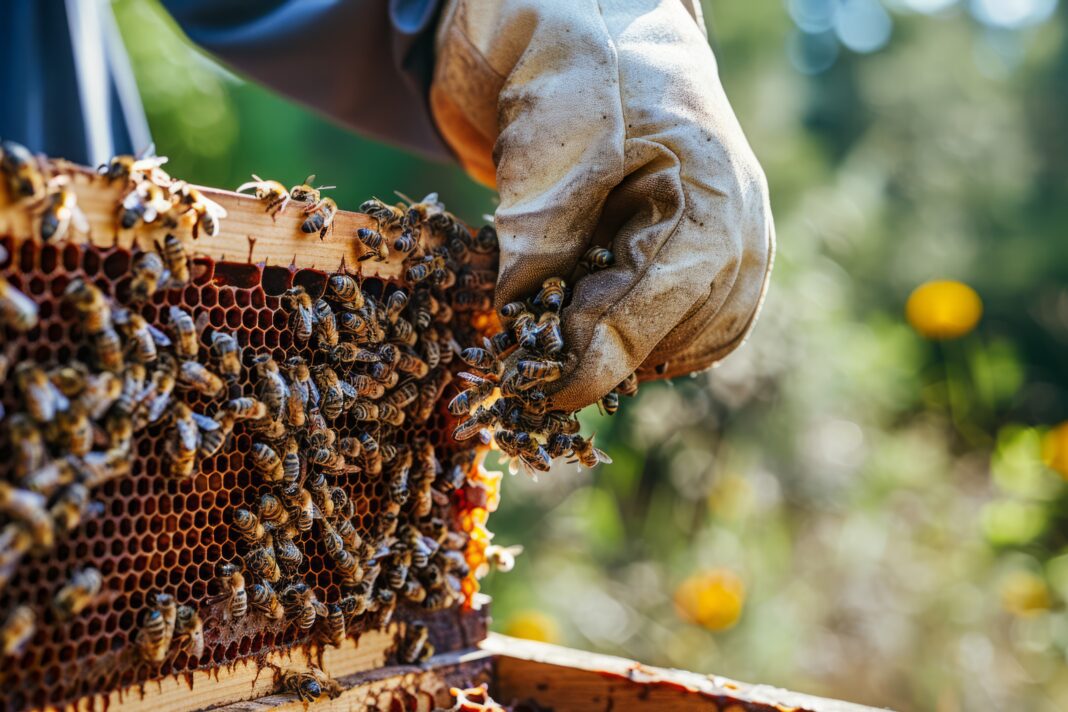

Honey bees entering a small roof gap may be building a much larger hive inside the structure.
The opening is only a doorway. Behind it, the colony may have built wax comb containing honey, pollen, eggs, larvae, and developing bees.
That is why proper honey bee removal in Katy involves more than stopping exterior activity. The colony must be located. Removal options must be assessed. Accessible hive material should be addressed. Entry points should then be sealed at the correct time.
Live relocation may be possible in some situations. It is not guaranteed for every colony. Accessibility, colony condition, safety, and the building layout all affect what can be done.
What Does Honey Bee Removal Include?
A complete structural service may involve:
- Confirming that the insects are honey bees
- Determining whether they are foraging, swarming, or nesting
- Locating the hive inside the structure
- Planning safe access
- Removing or managing the colony
- Removing accessible comb and honey
- Cleaning the affected cavity
- Repairing and sealing entry points
- Monitoring the property for continuing activity
The exact process depends on where the bees are located.
A swarm hanging from a branch requires a different response from a colony established behind brick, siding, drywall, or a roofline.
First, Determine Whether You Have a Swarm or a Hive
This is the first major decision during honey bee removal in Katy.
A Honey Bee Swarm
A swarm forms when a queen leaves an existing colony with a large group of workers. They may gather temporarily while scout bees search for a permanent nesting site.
A swarm can appear as a dense cluster on:
- A tree branch
- A fence
- A shrub
- A mailbox
- Outdoor furniture
- A wall
- A vehicle
- Playground equipment
Resting swarms are often less defensive when left alone because they do not yet have an established nest full of comb and brood to protect. Texas A&M AgriLife notes that some swarms move on within about 48 hours, although swarms near buildings or high-traffic areas should still be managed carefully.
Do not spray, shake, strike, or hose down a swarm.
It may move into a wall or roof cavity if it finds a suitable opening nearby.
An Established Honey Bee Colony
An established colony repeatedly uses the same structural opening.
Signs include:
- Bees entering one gap throughout the day
- Bees carrying pollen through the entrance
- Activity continuing for several days or weeks
- Buzzing from a wall or ceiling
- Bees appearing inside rooms
- Honey or wax odours
- Sticky stains on walls or ceilings
- Comb visible inside an opening
Honey bees build wax comb to raise their young and store food. Wasps build nests from paper-like material. This distinction is one of the clearest ways to separate a honey bee colony from a wasp infestation.
Where Honey Bees Commonly Build Hives
Honey bees prefer enclosed cavities that provide shelter.
Common nesting areas include:
- Wall voids
- Soffits
- Attics
- Chimneys
- Roof cavities
- Hollow columns
- Spaces behind siding
- Sheds
- Storage buildings
- Hollow trees
- Fireplace surrounds
- Utility enclosures
The visible entrance may be several feet from the main comb.
Bees can travel through a narrow channel before reaching a larger cavity. Opening the wall directly behind the entrance may therefore fail to expose the colony.
Professional inspection helps identify the most practical access point before building materials are removed.
Can Honey Bees Be Relocated?
Sometimes.
Live removal is most practical when the bees and comb can be reached safely. An accessible swarm may be collected without opening a structure. A hive behind removable siding may also offer workable access.
Relocation becomes harder when:
- The hive is deep inside a wall
- The colony is high above the ground
- Comb extends through several cavities
- Structural access is unsafe
- The colony has been contaminated by pesticides
- Building materials cannot be opened easily
- The bees are unusually defensive
- No suitable receiving arrangement is available
Texas A&M AgriLife notes that some companies attempt live removal, but it is not always practical or possible. Live removal may also require more time and labour.
A trustworthy provider should inspect the site before promising relocation.
Why Hive Material Must Be Addressed
Removing adult bees is only one part of structural honey bee removal in Katy.
An established hive may leave behind:
- Wax comb
- Stored honey
- Pollen
- Brood
- Dead bees
- Propolis
- Hive debris
Leaving these materials inside the building can create several problems.
Honey May Leak
Wax comb is maintained by an active colony.
After the bees are removed, unsupported comb may soften, break, or release stored honey. This can cause staining on drywall, ceilings, siding, or insulation.
Other Pests May Enter
Honey and organic hive debris may attract:
- Ants
- Cockroaches
- Beetles
- Wax moths
- Flies
- Other scavenging insects
Removing accessible material helps reduce these secondary issues.
Odours May Develop
Brood and organic debris can produce noticeable smells as they deteriorate.
Another Swarm May Use the Cavity
Old hive odours can remain inside a building. If the entry point is left open, another swarm may investigate the same space.
That is why homeowners comparing results for honey bee removal near me should ask whether comb removal, cleanup, repair, and exclusion are included.
What Happens During Professional Honey Bee Removal?
Step 1: Species Identification
The technician confirms that the insects are honey bees.
Honey bees generally have hairy bodies, stout shapes, and wide rear legs used for carrying pollen. Wasps tend to look smoother and have more distinct narrow waists.
Step 2: Activity Assessment
The provider determines whether the property has:
- Foraging bees
- A temporary swarm
- An established colony
- More than one colony
- Another species of bee or wasp
Bees gathering nectar from flowers usually do not require removal.
Step 3: Hive Location
The technician studies the flight path, building layout, sound, heat patterns, and available access points.
The objective is to locate the comb before opening walls or ceilings.
Step 4: Access Planning
Access may require removing:
- Siding
- Soffit panels
- Drywall
- Roof materials
- Chimney components
- Exterior trim
- Column panels
The service provider should explain what will be opened and who will restore it.
Step 5: Colony Removal
The chosen method depends on access, colony condition, building design, and safety.
The provider should explain whether the plan involves collection, extraction, relocation, another control method, or a combination of steps.
Step 6: Comb and Honey Cleanup
Accessible comb should be assessed and removed where practical.
The cavity may also require cleaning to reduce residue and hive odours.
Step 7: Structural Repair and Exclusion
After the colony is removed, openings should be repaired and sealed.
Texas A&M AgriLife recommends blocking openings around pipes, wiring, window frames, wood siding, brick joints, and chimneys to prevent bees from entering structures.
Why You Should Not Seal an Active Hive
Sealing the entrance may appear to be a fast solution.
It can redirect the problem indoors.
Bees trapped inside a wall will search for another exit. They may emerge through:
- Ceiling fixtures
- Air vents
- Attic openings
- Wall cracks
- Window frames
- Fireplace gaps
- Recessed lighting
Texas A&M specifically warns against blocking active entry points because trapped bees may find or create an alternative route into the building.
Removal comes first. Sealing comes later.
Other DIY Methods to Avoid
Do not:
- Spray only the hive entrance
- Fill the opening with expanding foam
- Open drywall without locating the comb
- Use fuel or flammable products
- Apply smoke inside a structure
- Spray bees from a ladder
- Strike or disturb a swarm
- Use a pesticide contrary to its label
EPA pesticide labels contain the approved directions, conditions, and precautions for using each registered product. Those instructions are designed to protect people and the environment.
How Much Does Honey Bee Removal Cost?
The cost depends on the work required.
Important factors include:
- Swarm or established colony
- Hive location
- Height
- Access difficulty
- Colony size
- Amount of comb
- Structural opening
- Honey cleanup
- Building repairs
- Exclusion work
- Follow-up visits
- Urgency
A low, accessible swarm may require less work than a mature hive extending through a wall.
A company offering honey bee removal near me should ask detailed questions before confirming a final price.
How Long Does the Process Take?
The timeline depends on the colony and structure.
A swarm collection may be completed during one visit. Structural removal can involve inspection, access, colony management, comb extraction, repairs, exclusion, and follow-up.
The provider should explain:
- How long the active work may take
- Whether repairs happen the same day
- How much bee activity may remain afterward
- When the site should be rechecked
- When nearby openings will be sealed
Request Honey Bee Removal in Katy
Do not seal, spray, flood, or open an active hive without a removal plan.
Raul The Bees Guy can identify the activity, locate the colony, evaluate relocation options, and explain the cleanup and exclusion work required.
Contact us for professional honey bee removal in Katy when bees have entered a wall, roof, chimney, attic, or other structural cavity.
A detailed inspection is the safest first step when searching for responsible honey bee removal near me.