

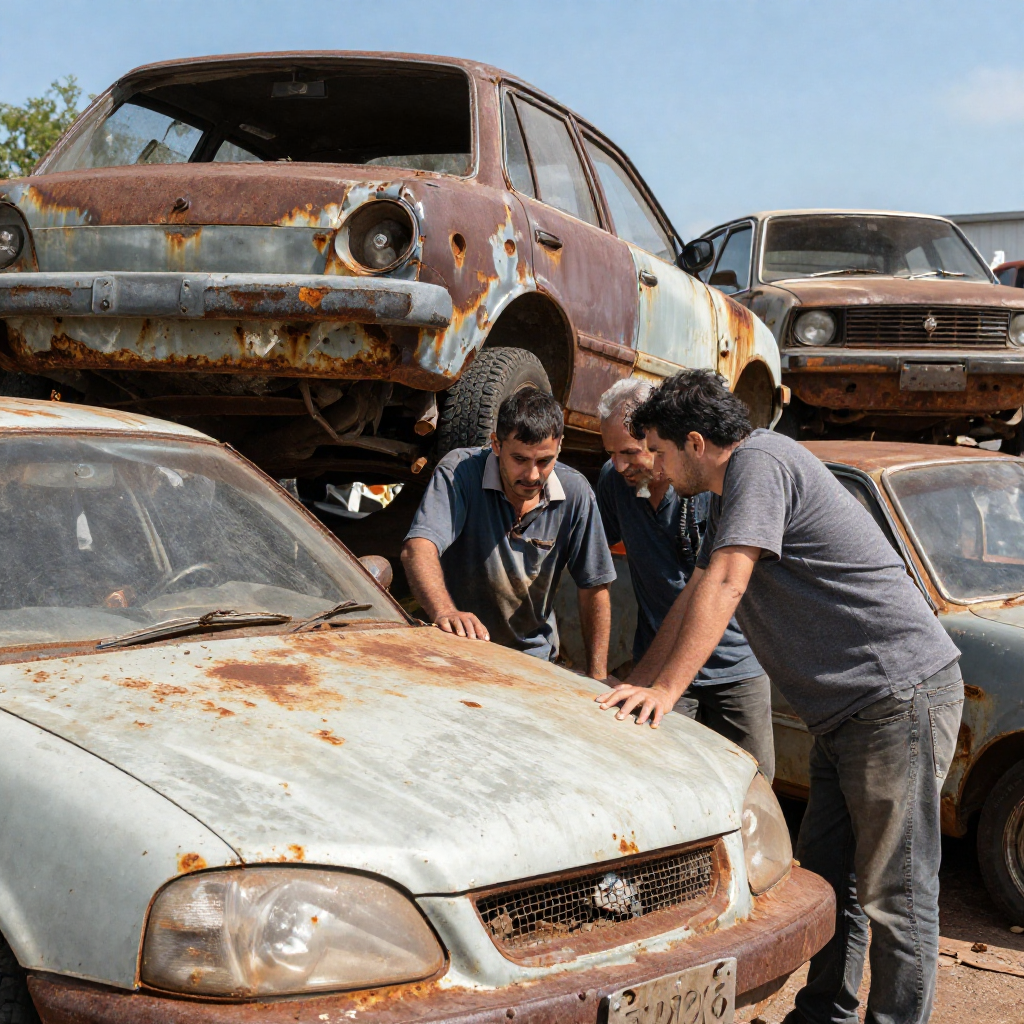

A dead battery on a minus-twenty morning can turn a daily driver into a car that sits for months. Many Edmonton owners boost it once, hear a click, and give up until spring. Then the car blocks the driveway, the plates expire, and the question changes from “how do I fix it” to “what is this thing worth now.” This guide explains how cash for non-running vehicles in Edmonton works, from the first phone call to the tow.
The short answer is that a car which will not start is still worth something. A buyer does not need to hear the engine. The buyer needs to see the car.
Why a Dead Car Still Has Value
A vehicle keeps its value because the value was never only in the engine. Three things stay with the car no matter what it does when you turn the key.
- Metal. A car is mostly steel, aluminum and other metals. Scrap metal has a market price, and that price changes week to week.
- Weight. A heavier vehicle holds more metal. A full-size truck weighs far more than a compact hatchback, so the metal in it is worth more.
- Parts. Doors, seats, wheels, the transmission and the catalytic converter can all be reused or recycled if they are still on the vehicle.
This is why buyers talk about “intact” cars. An intact car with its parts still attached is worth more than a stripped one of the same model. The stripped car has lost its parts value. Only the metal remains.
Think of two cars of the same make and year. One sits in the driveway with a dead battery and every part in place. The other has been picked over for a year, with the wheels, seats and doors gone. This is a hypothetical pair, but the idea is real. The first car will draw a stronger offer, even though neither one starts.
A non-running car is simply a car with one problem. It might be a dead battery, a failed starter or a blown engine. Whatever the cause, the rest of the vehicle still counts.
What a Buyer Checks by Eye
The process behind cash for non-running vehicles in Edmonton rests on this visual check, not on a test drive. Nobody turns the key. The buyer reads the car with their eyes.
A phone call gives a rough idea. It does not give a final number. A firm offer comes from looking at the vehicle in person, and the walk-around is fairly quick.
Here is what a buyer is likely to look at.
- Year, make and model. These tell the buyer what the car weighs and which parts are in demand.
- Overall condition. Rust, body damage and missing panels all change the picture.
- Whether the car is whole. Are the engine, transmission, wheels and interior still there?
- Type of damage. Collision, hail and flood damage are all common. Each affects which parts can be saved.
- Where the car sits. Access matters for the tow. A car in a tight garage or behind a fence takes more planning than one at the curb.
The buyer then weighs these against the current scrap-metal price. That is also why no quote lasts forever. If the metal market moves, the number can move with it.
Why the Cause of the Problem Matters Less Than You Think
Owners often worry that a big repair bill makes the car worthless. It does not work that way for a scrap or salvage buyer. A repair only matters when it would put the vehicle back on the road at a sensible cost. If it would not, the buyer values the weight, the parts and the metal instead.
Photos can help you describe the car on the phone. Take a few from each side, one of the interior and one of the odometer. They are not a substitute for the visit. They just make the first call more useful for both of you.
What to Have Ready Before the Buyer Arrives
Preparing for cash for non-running vehicles in Edmonton is mostly paperwork. A buyer cannot purchase a vehicle without proof that it is yours to sell. Ownership documents are the one item you cannot skip.
A few other items help the visit go smoothly.
- Proof of ownership, such as your registration or ownership document.
- A note of any lien. If money is still owed on the car, the lien has to be cleared before the sale. Your lender can tell you the steps.
- Your personal items, cleared from the glovebox, trunk and under the seats.
If the ownership document is lost, sort that out first. A replacement can take time, so start the request early. The registry or your insurer can tell you what to bring. Without proof of ownership, a legitimate buyer has to say no, and that protects you as much as it protects them.
Sale paperwork in Alberta is normally explained at collection. If you are unsure what the registry needs from you, check with the Alberta registry before the buyer arrives. If an insurer assessed the vehicle after a collision, ask the insurer about its salvage status first.
How a Car Moves When It Cannot Drive
A non-running car gets moved by tow truck, and a good buyer handles that part. You do not need to rent a trailer or call a separate tow company. Some local buyers cover the tow inside their service. For example, a local buyer’s website explains that towing is free on every vehicle within 80 km of Edmonton, and that the cost is not taken out of the offer.
That radius covers a lot of ground around the city. It includes Sherwood Park, St. Albert, Spruce Grove, Stony Plain, Leduc, Fort Saskatchewan, Nisku, Beaumont, Devon and Morinville.
The usual sequence looks like this.
- You call or text with the year, make, model, condition and location.
- The buyer visits and looks at the car. This is where the firm offer is given.
- If you accept, the car is towed away. Pickup is often the same day.
- Cash is paid at the moment of collection.
Before the tow truck arrives, make sure the car can be reached. Clear a path if you can. Move other vehicles out of the way. If the car is stuck in deep snow, say so on the phone so the driver brings the right equipment. You do not have to shovel it out yourself.
Buyers who collect cars regularly have seen hard spots. A car on an acreage, a car buried in snow or a car parked in a back lane is not unusual. Snow is part of an Edmonton winter, so it helps to tell the buyer about it up front.
Keys and Plates Are Not the Barrier You Expect
Many owners hold off because they lost the keys or took the plates off. That worry is usually unnecessary. One local buyer accepts cars with no keys or plates, so a missing set of either does not end the sale.
Ownership paperwork is the real requirement. Keys are not. That surprises people, but it makes sense. The car is going to be dismantled, its parts sorted and its metal recycled. Nobody needs to start it for that.
A tow truck also lifts the whole vehicle, so a car without plates can still be moved. Ask the buyer you call to confirm this for your car. Check with the Alberta registry about what it asks you to do with old plates.
What If the Car Has Been Sitting on Your Property for a Long Time?
A car that sits for a long time can draw attention from the city. Check the City of Edmonton rules for vehicles left on a property, and ask the buyer if you are unsure.
A Ready-List for the Day You Call
A sale of this kind moves only as fast as the information you give, and cash for non-running vehicles in Edmonton is no exception. Before you call, gather these items.
- The year, make and model of the car.
- A plain description of its condition, including whether it starts, drives or has been in a collision.
- The exact location, and any access problems such as snow, a gate or a tight space.
- Your proof of ownership.
- The lien status, if you still owe money on the car.
- Your belongings, removed from the vehicle.
With those six items in hand, the call is short and the visit is simple. The firm number comes from the in-person look, not from the list. Cash for Cars Edmonton is one local buyer of running and non-running vehicles in any condition, so the same list applies there.