

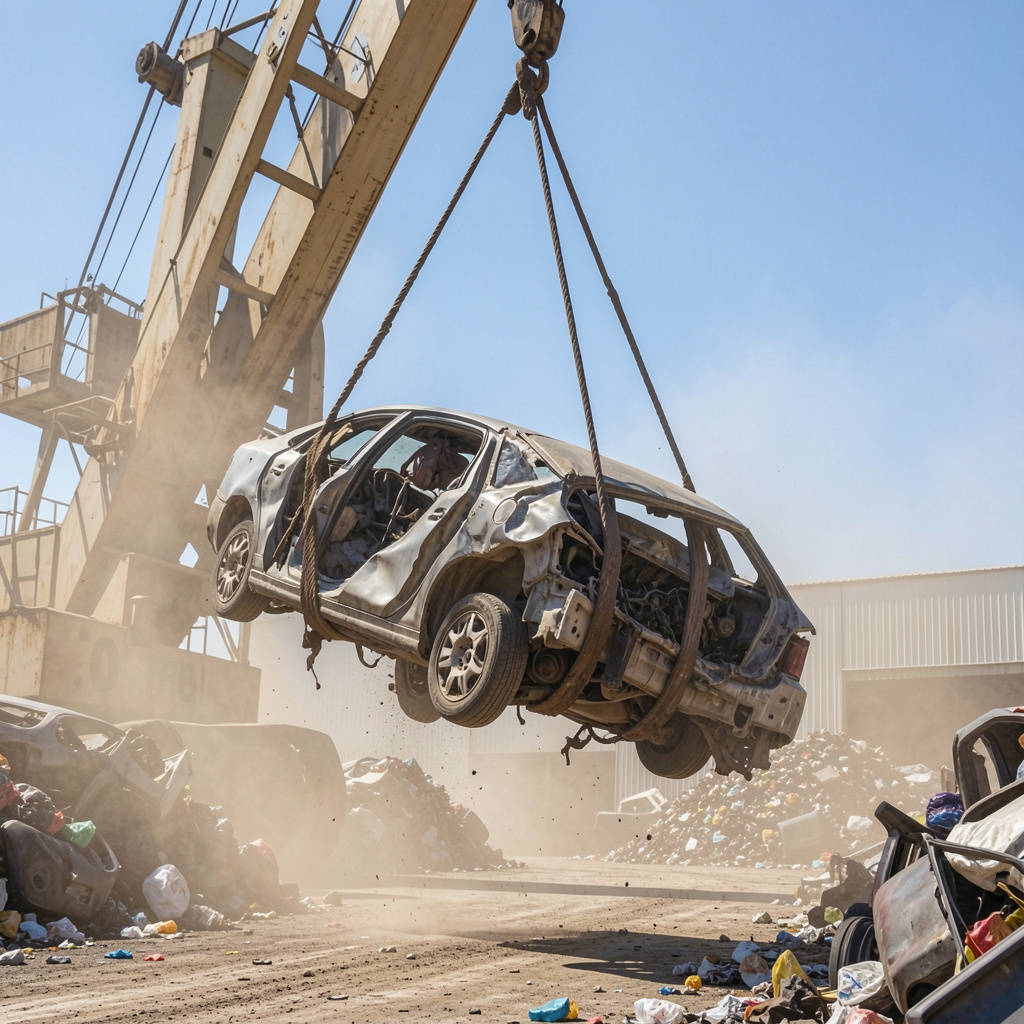

A car at the end of its life leaves its owner with questions. Is it worth anything? Who moves it? What paperwork is needed? What happens to it afterward? These come up in almost every call about scrap car removal Fort Saskatchewan residents arrange each year, and the answers are simpler than most people expect. This guide takes the eight most common questions one at a time.
1. What Counts as a Scrap Car?
A scrap car is a vehicle at the end of its useful life, valued mainly for its metal and its salvageable parts rather than for driving. Typical examples include:
- A car with a seized or blown engine
- A body with heavy rust or frame damage
- A vehicle damaged by collision or hail beyond economical repair
- A car that failed inspection and is not worth fixing
- A vehicle that has sat unregistered for years
Not every old car is a scrap car. A car that still runs but is simply unwanted is usually called a junk car. A car with a branded history that can still be repaired is called a salvage vehicle. The labels matter less than they seem, because most buyers take all three and explain which one applies when they quote.
2. What Is a Scrap Car Worth?
The value depends on four things: the weight of the vehicle, the current scrap-metal price, any parts worth saving, and the car’s year, make and condition. A heavy vehicle holds more metal. A complete car usually brings more than a stripped shell. And because metal prices move from month to month, two similar cars can be worth different amounts at different times.
No honest buyer can name a price without knowing the car. Expect a rough figure first, then a firm one once the buyer has the VIN or sees the vehicle.
3. Does the Car Need to Run?
No. A scrap car does not need to start, steer or roll. Its value comes from what it is made of, not from whether it drives. A car with a flat tire, a dead battery or a seized engine can still be collected with the right equipment.
The only practical requirement is safe access. The tow truck must be able to reach the car and load it. A snowbank, a locked gate or a car boxed in by others can delay a pickup. Clear them in advance when possible.
4. Who Pays for the Tow?
This is the question that matters most to the final payment. Some buyers charge for towing or subtract it from the offer. Others include it at no charge.
The company behind the scrap car removal service in the Fort Saskatchewan area at Same Day Cash For Cars says its tow is free on every vehicle it buys, whether the car rolls onto the truck or has to be winched. It adds that the tow cost is never deducted from the agreed offer. Sellers who compare buyers can use that wording as a benchmark. The point is not which company a seller picks. The point is getting the answer before agreeing.
5. What Paperwork Is Needed in Alberta?
Three items cover most sales.
- Proof of ownership, such as the vehicle registration
- Government-issued photo ID
- A signed bill of sale, which records the vehicle, the price and both parties
Licence plates are a separate matter. In Alberta, plates belong to the owner and not the vehicle. They should come off before the car leaves. The owner can then cancel them at a registry agent and ask whether any refund applies to unused registration time. A lost registration or an unpaid lien complicates the sale, so mention either one on the first call.
Missing parts matter here too. Anyone arranging scrap car removal Fort Saskatchewan wide should tell the buyer what is gone, such as a converter, a wheel or a door. Missing parts lower the offer, and saying so early avoids an argument at the driveway.
6. What Happens to the Car Afterward?
A scrap car does not simply get dumped. In responsible end-of-life vehicle recycling, the first step is draining and removing hazardous materials such as fuel, oil, other fluids, the battery and the tires. These can harm soil and water if left in place.
After that, reusable parts are pulled, and the remaining body is processed so that recoverable materials come out of it. These include steel, aluminum, copper and glass. The process keeps metal in use and keeps contaminants out of the environment, which is why it matters even for a car that looks beyond help.
Think of a car that has sat behind a barn for six years. Its tires are flat and its fluids have aged. Left alone, those fluids can leak into the ground over time. Moving the car to a proper recycling stream ends that risk. For many owners, that is as good a reason to act as the cash itself.
7. How Fast Can the Car Be Removed?
Speed varies. Some local buyers can collect on the same day, though that depends on the location and the day’s schedule. Others need several days. Rural addresses and bad weather can add time.
A seller with a deadline, such as a driveway that must be cleared before a move, should say so up front and ask for a firm pickup window. A buyer who says “most cases same-day” is giving an honest answer. A buyer who promises same-day for every booking without conditions is promising more than any tow schedule can guarantee.
Weather deserves a thought as well. In an Alberta winter, a car can sit under snow for weeks, and ice on a driveway slows loading. Clear a path to the car and the wheels if you can. If the car sits on a slope or a narrow lane, tell the buyer so the crew can bring the right truck.
8. How Can a Seller Avoid a Bad Deal?
Most bad deals share a few warning signs. The table below sets them next to the healthy version of each.
| Warning sign | Healthy version |
| A big number with no explanation | A quote that names its inputs: weight, metal price, parts, condition |
| A tow fee that appears at pickup | Towing confirmed as free or priced in advance |
| Payment “later” by cheque | Payment at pickup by cash or e-transfer |
| No paperwork offered | A signed bill of sale on the spot |
| Pressure to decide in minutes | Time to compare at least two quotes |
Two quotes take about ten minutes to collect. They are the cheapest protection a seller has.
A Short Checklist Before the Call
- Write down the year, make, model, mileage and VIN.
- List every known fault, including missing parts.
- Photograph all sides of the car and any damage.
- Find the registration and photo ID.
- Remove the licence plates and empty the car of personal items.
Putting the Answers to Work
Scrap car removal Fort Saskatchewan owners can feel good about comes down to a few plain checks. Know what the car is made of, describe it honestly, confirm that the tow is free, get the paperwork signed, and make sure the money arrives when the car leaves. A seller who covers those points has handled nearly everything that can go wrong.