

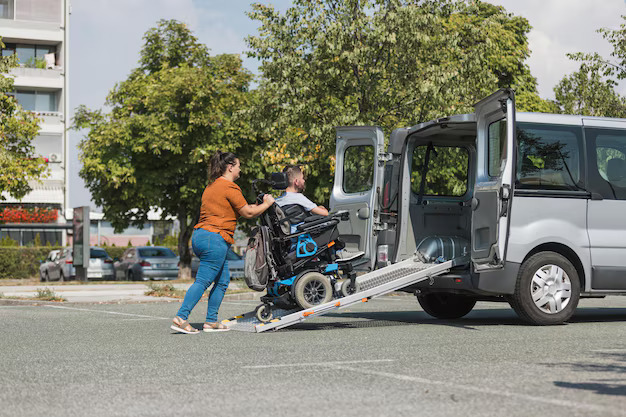

Most people only see the van at the kerb. They do not see the planning, the calls and the small checks that happen before the door slides open. For a person with a disability, those hidden steps decide whether a trip feels calm or stressful. This guide walks through disability transport services Perth families use, from the first phone call to the moment the person is safely inside the appointment.
The steps below are written from the inside, in the order they usually happen. Details differ between providers, so treat this as a map and not a promise. Every person’s needs are different, and a good provider will say so.
Step 1: The first enquiry
It starts with a call or an online form. The person, a parent, a carer or a support coordinator makes it. Most providers ask a short set of questions at this point.
- Where does the person live, and where do they need to go?
- Is this a one-off trip or a regular routine?
- Does the person use a wheelchair, a walker or a mobility scooter?
- Does anyone need to travel with them?
- Is there a funding plan, such as an NDIS plan, behind the trip?
None of these questions are meant to test anyone. They help the provider decide what kind of vehicle and what kind of support the trip needs. A person who walks with a frame needs something different from a person who stays seated in a chair.
Step 2: Matching the trip to the person
After the first call, a good provider turns the answers into a trip plan. This is the part most people never see. The plan covers the pick-up point, the route, the drop-off point and the time needed at each end.
Time is the detail that gets missed most often. A medical appointment at 9:00 am does not mean a 9:00 am arrival. The person may need a few minutes to settle, find the right room or use a bathroom. A sensible plan builds in that buffer.
Some people need more than a ride. They need a calm voice, a clear routine and the same face each week. Others want help to learn the route themselves over time. The plan should reflect which of these applies.
Step 3: Funding and paperwork
Money questions come next, and they can feel heavy. Under the NDIS, transport funding is usually included for participants who cannot use public transport because of their disability. Whether it applies to a given person depends on their own plan. Only the plan, the participant and their planner can settle that, so it is worth checking the plan wording before the first trip.
Providers commonly ask for a few things at this stage.
- The name and contact details of the person travelling.
- A note of any funding category the trip will be charged to.
- Details of any equipment that travels with the person.
- An emergency contact.
Keep copies of anything you sign. A written record of what was agreed makes later changes much easier.
Step 4: Where the service fits across Perth
Perth is a wide city, and distance changes how transport works. A trip from Joondalup to a clinic across the river is a very different job from a short run to a local shop. Providers tend to work best in the suburbs they know well. They know which roads back up at school pick-up time and which car parks have a step-free path to the door.
One local example is the Transport and Mobility service run by Jakruma Pty Ltd‘s transport and mobility support in Perth. Its page describes help getting to medical appointments, therapy, work, activities, shopping and community events. It lists Perth’s northern suburbs, including Joondalup, Wanneroo, Clarkson, Butler, Heathridge and Banksia Grove. It also describes ongoing transport based on a person’s routine, plus one-off trips and training for people who want to build travel confidence.
A listing like this is a starting point. The useful question for any provider is simple: does the service area cover both ends of the trip? If one end falls outside it, ask early.
Step 5: Pick-up day
On the day, the driver should arrive on time and confirm who they are. A short, friendly greeting matters more than people expect. It tells the person that the trip has started well.
The driver then checks the plan. Is this the right person, the right destination and the right return time? This takes ten seconds and prevents most mix-ups.
If the person lives in a unit or a house with steps, the driver may need to help at the door. This is where the early questions pay off. A driver who already knows about the step can come ready, with the right ramp and the right pace.
Step 6: Getting in and getting settled
Boarding is the most hands-on moment of the whole trip, and it is where disability transport services Perth providers show their training. The driver helps the person get in and out of the vehicle. For a wheelchair user, that may mean a ramp or a lift, then securing the chair so it cannot move. For someone who walks, it may mean a steadying arm and a moment to find the seat.
Good drivers talk through each action before they do it. “I am going to lift the ramp now” is a simple sentence that removes surprise. Surprise is what makes boarding stressful for many people, especially people who are anxious or who have sensory needs.
Once the person is in, the driver checks the seat belt or chair restraints and asks if the person is comfortable. Only then does the vehicle move.
What comfort can mean
Comfort is personal. Some people like quiet. Others like music or a chat. Some need the window open or the air conditioning low. A regular driver learns these preferences over time, and a good provider records them so a different driver can follow them.
Step 7: The drive itself
On the road, safety comes first. The driver watches the route, the traffic and the person. A smooth drive with gentle braking matters more than a fast one. For many passengers, a sudden stop is not just uncomfortable. It can cause pain or distress.
If the plan allows, the driver may also use the trip as a small chance to build skills. A person working toward more independence might learn to spot the landmarks on the route. Over weeks, the same trip can become a lesson in reading a bus timetable or planning a train connection. That kind of travel training is a separate goal from simply getting there, and it should only happen when the person wants it.
Step 8: Arrival and handover
Arriving is not the end of the job. The driver should stop as close to the entrance as safely possible and help the person out. If the person needs support inside, the driver should confirm that someone is there to take over.
A clear handover has three parts.
- The person is out of the vehicle, safe and steady.
- Their belongings, such as bags, aids and phones, are all with them.
- The return time is agreed, and the driver knows where to meet them.
A missed return time is one of the most common causes of worry for families. Saying it out loud at the door, in plain words, closes the gap.
Step 9: The return and the follow-up
The trip home follows the same pattern in reverse. The driver meets the person at the agreed spot, checks they are ready and repeats the boarding steps. Appointments run late. A provider with flexible scheduling can handle that without making the person feel rushed or guilty.
Afterwards, a short check-in is useful. Did the trip go well? Was anything uncomfortable? Did the timing work? Small fixes, like a different pick-up point or a ten-minute earlier start, often make the next trip better.
A hypothetical week, to make it concrete
The following example is made up to show how the steps fit together. It is not a real customer.
Imagine a young man who uses a manual wheelchair. On Mondays he attends a community activity. On Thursdays he has therapy. His mother used to drive him, but her work hours changed. She calls a provider, explains the routine and mentions that her son becomes anxious when plans change at the last minute.
The provider arranges the same driver for both days. The driver arrives five minutes early, greets him by name and explains each action as the ramp is lowered. After a few weeks, the young man starts to look forward to the Monday ride. The trip has become part of his routine instead of a source of worry. That is the quiet goal of good transport support.
Questions Worth Asking Before the First Trip
Whatever provider you consider, a few questions tell you a lot. Ask them before the first booking and keep the answers in writing.
- Which suburbs does the service cover, and are there time limits?
- What vehicles are used, and do they fit the person’s chair or equipment?
- Will the same driver come each time, where possible?
- How are late changes and cancellations handled?
- How does the provider keep trips safe, and who is the contact if something goes wrong?
Services such as Jakruma Pty Ltd say they put safety first and draw on local Perth knowledge. A claim like that is worth testing with a simple, direct question about how it works in practice. The answers should be specific. Vague answers are a sign to keep looking.
The picture to keep in mind is simple. Good disability transport services Perth families can rely on are built from many small, careful steps, and each step is something a person can ask about. Look for plain answers, a clear plan for each trip and a driver who explains what happens before it happens. Then the van at the kerb is just the visible end of a well-run process.

