

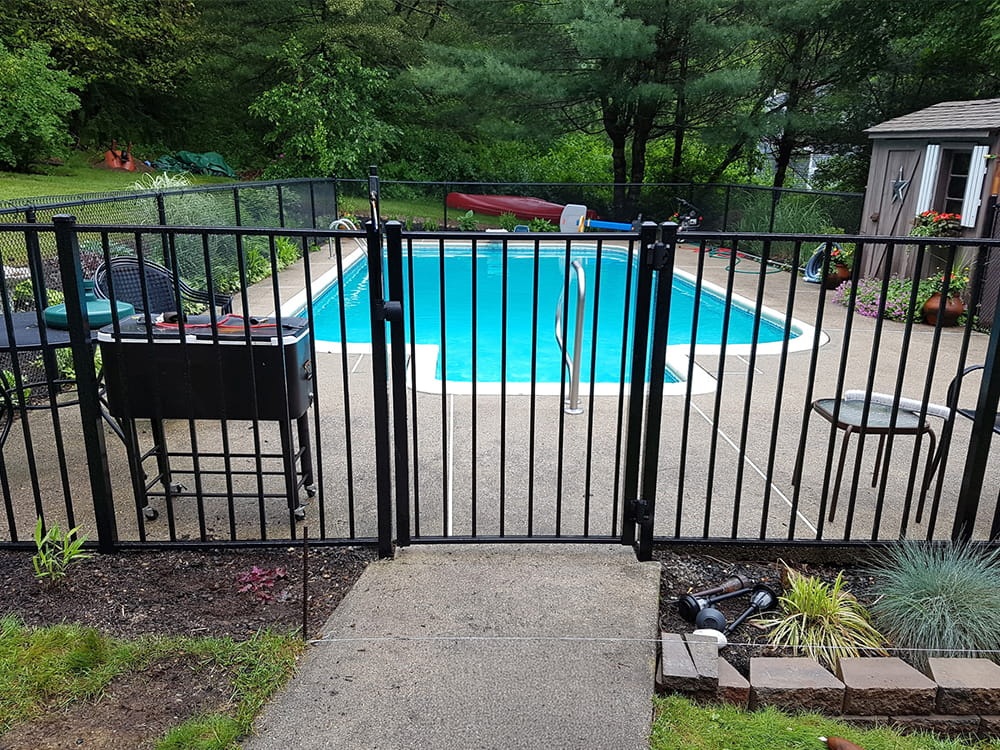

A pool barrier in Australia must be at least 1.2 metres high. Plenty of owners guess lower, and some builders of old fences guessed wrong too. That is one example of how pool rules get lost between the shop, the backyard and the council. Anyone typing pool fencing near me into a search bar in Perth is about to make a decision that affects child safety, a council inspection and a few thousand dollars. These eight myths come up again and again. Each one is sorted from fact below.
Myth 1: Glass is a weak choice for a pool fence
Fact: pool glass is toughened safety glass, and it is a standard barrier material. It is made much stronger than ordinary window glass, and if it breaks it shatters into small blunt pieces. Frameless panels hold the glass with spigots or channels at the base. Semi-frameless panels add posts at intervals.
Good glass fencing also gives an unbroken view of the pool, which helps adults keep watch. Hardware matters as much as the glass. Fittings in a coastal or chlorinated setting should resist corrosion, so ask what the spigots and hinges are made from.
Myth 2: Any fence about a metre high will pass
Fact: the Australian Standard for pool barriers, AS 1926.1, sets a minimum barrier height of 1.2 metres. Other limits sit alongside that number. Gaps at the bottom must be small, and openings in the barrier must be too narrow for a small child to pass through. The area around the outside of the fence must be clear of anything a child could climb, such as a chair or a low shrub with a thick trunk.
Use this short list when you inspect an existing fence:
- Measure the height from the ground on the outside
- Look for climbable items within the clear zone
- Check the bottom gap
- Test every gate and latch
- Check for loose posts or missing panels
Myth 3: The gate can swing either way
Fact: a pool gate must open away from the pool, and it must close and latch by itself. A gate that swings toward the pool can be pushed open by a child leaning on it, so the rule exists for a good reason. The latch sits high enough that a small child cannot reach it.
The self-closing feature is the one most likely to fail over time. Hinges wear. Gates sag. A gate that stops short of the latch is a failed gate. Test it by opening it halfway and letting go. It should close fully and click shut every time.
When you compare pool fencing near me quotes, ask each installer to state the barrier height, the gate type and the clear zone in writing. These three details show quickly whether an installer knows the standard or is guessing.
Myth 4: A pool alarm or cover can replace a fence
Fact: alarms and covers are extra layers of protection, and they are not substitutes for a compliant barrier. A cover can be left off. An alarm can be switched off or run out of battery. A fence works all day without anyone remembering to use it. That is why the rules focus on the physical barrier.
Layers still help. Many families add a gate alarm, a locked side gate and swimming lessons for children. Treat these as additions to the fence, not replacements for it. Supervision by an adult is the final layer, and nothing replaces it.
Myth 5: A fence that passed once will always pass
Fact: pool barriers must be maintained, and local councils inspect them on a regular cycle. In Western Australia, councils inspect pool barriers at least once every four years. Fences drift out of compliance in small ways. A tree grows near the boundary. A gate hinge loosens. A pot plant or a chair ends up near the fence.
A simple six-month routine helps:
- Clean glass and wipe down aluminium
- Check gate hinges and the latch
- Trim plants away from the barrier
- Move furniture, bins and toys away from the fence line
- Look for rust, cracks or loose fixings
Myth 6: Above-ground pools do not need a barrier
Fact: pools of every type need a compliant barrier, including above-ground and inflatable pools that hold more than 300 millimetres of water. The pool wall can sometimes act as part of the barrier if it meets climb and height rules, but many do not. Do not assume. Ask the council or a licensed installer to check the specific pool.
Straight Up Retaining Fencing & Earthworks, a Beechboro business, lists in-ground and above-ground pools, new installations and upgrades on its pool fencing page. It also describes sloped blocks and small yards as sites it works on. Those are the company’s own descriptions, so a homeowner should confirm any detail for a specific property.
Myth 7: Cheaper means the same fence
Fact: quotes vary because fences vary. Price depends on the fence type, the length, the number of gates, the ground conditions and the shape of the pool. Glass costs more than aluminium. A sloped block costs more than a flat one, because every panel must be cut or stepped to follow the ground. A low price can hide a thin panel, a cheap hinge or a skipped ground-preparation step. Ask each installer for a written scope and compare line by line.
Myth 8: The nearest installer is the best one
Fact: distance matters, but it is only one factor. A good result depends on the installer’s licence, the assessment of your site, the quality of the hardware and a final check against the rules. The best pool fencing near me search ends with a short list of installers who can explain each of those points in plain words.
Ask these questions of every candidate:
- Are you licensed, and can I see the details?
- Do you inspect the site before quoting?
- What is your installation process from start to finish?
- How long does installation take?
- Who checks compliance when the job is done?
The business above describes a process of site inspection, fence selection, installation and a final check against WA pool safety standards. Most installations take one to two days, though glass may take longer. A clear timeline is a good sign.
A good site inspection covers more than the fence line. The installer should walk the boundary, check the ground for slope and soft spots, and note any trees, steps or garden beds that affect the barrier. Footings and post positions depend on the soil. Sandy ground needs different treatment from clay or limestone, so ask how the installer plans for yours.
The inspection is also the time to raise gates. Decide where people will walk to the pool, which way the gate should open, and whether the gate will face a path or a lawn. A gate placed badly can be hard to use, and an awkward gate is more likely to be propped open.
Finally, ask what happens after the job. A tidy installer removes old fencing, clears the site and runs a final check against the pool rules. Ask for a written note of that check, and keep it with the pool paperwork.
What to do next
Pick the fence type that suits your yard and your budget. Check the height, the gate and the clear zone. Book a site inspection with two or three installers and compare the written scopes. Keep the compliance paperwork, because a future buyer or an inspector may ask for it. A pool fence is a safety device first and a design feature second, and the best result from any pool fencing near me search comes from asking plain questions before signing anything.