

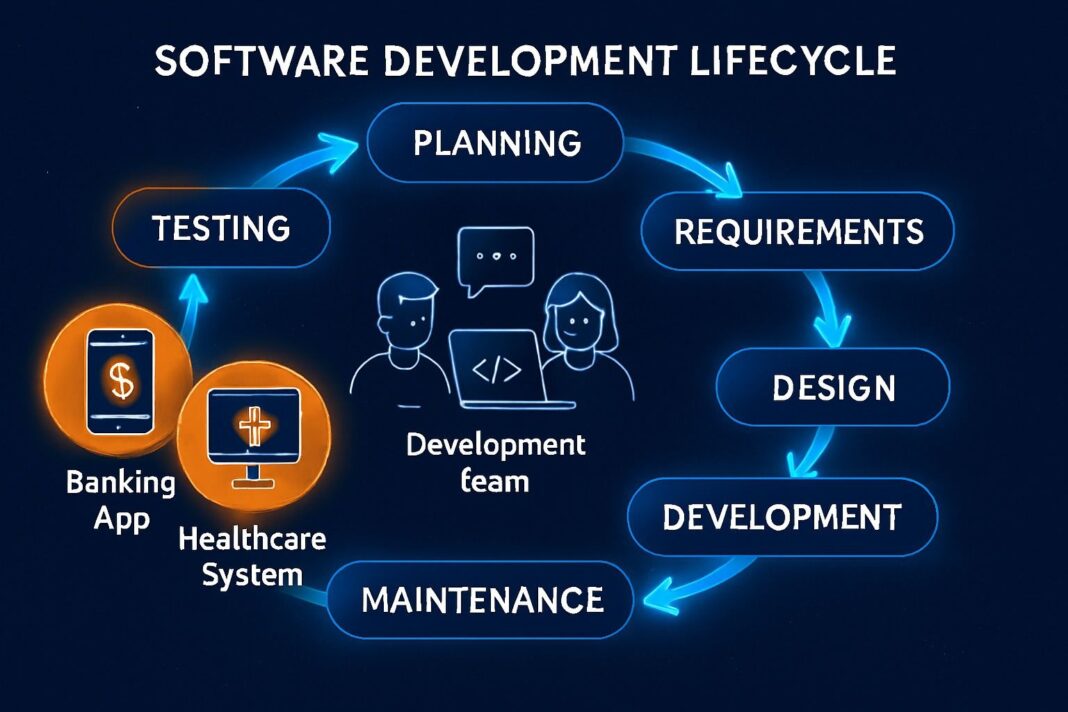

The stages in system development life cycle provide a structured approach to planning, designing, developing, testing, deploying, and maintaining software systems. Organisations rely on this process to ensure that technology projects meet business requirements, stay within budget, and deliver reliable results. By following a well-defined development lifecycle, businesses can reduce risks, improve collaboration, and manage software projects more effectively.
Understanding the software system development life cycle is particularly important for organisations managing complex IT environments. With the right processes, businesses can improve application quality, strengthen security, and ensure their technology investments continue to support long-term objectives. Beyond Applications helps organisations improve application visibility and rationalisation, supporting better decisions across their software environments.
What Is the System Development Life Cycle?
The System Development Life Cycle (SDLC) is a systematic framework used to develop and maintain information systems and software applications. It divides development into manageable phases, each with specific objectives, activities, and deliverables.
The SDLC helps project teams understand what needs to be accomplished at every stage. It also establishes checkpoints for evaluating progress, identifying problems, and confirming that the system meets business expectations.
Although organisations may follow different SDLC models, such as Waterfall, Agile, or iterative development, most approaches include several fundamental stages.
1. Planning and Requirement Analysis
Planning is the first stage of the development lifecycle. During this phase, stakeholders identify business problems, define project objectives, estimate budgets, and determine the resources required.
Requirement analysis follows by gathering information from users, managers, and technical teams. These requirements establish what the system must accomplish and which features it should provide.
Important activities include defining project scope, assessing feasibility, identifying risks, and documenting functional and non-functional requirements.
Effective planning helps organisations avoid misunderstandings and reduces the likelihood of expensive changes later in development.
2. System Design
Once requirements are established, developers and architects create a blueprint for the proposed system. This stage translates business needs into a technical design that guides implementation.
System design may include database structures, application architecture, user interfaces, security controls, integrations, and infrastructure requirements.
Teams must also consider scalability, performance, maintainability, and compatibility with existing applications.
A well-designed system supports future improvements and helps prevent technical problems as business requirements evolve.
3. Development and Implementation
The development stage involves writing code and building the system according to the approved design. Developers create application components, configure databases, integrate services, and implement the required functionality.
Teams may use version control, coding standards, and continuous integration tools to maintain consistency and improve collaboration.
In Agile environments, development often takes place in short iterations, allowing teams to deliver features incrementally and incorporate feedback throughout the project.
Following established development practices helps create software that is easier to test, maintain, and upgrade.
4. Software Testing and Quality Assurance
Testing verifies that the system works as expected and satisfies its documented requirements. It helps identify defects before deployment and reduces the risk of operational disruption.
Common testing activities include functional testing, integration testing, performance testing, security testing, and user acceptance testing.
Automated testing can improve efficiency by repeating checks whenever developers introduce changes. However, manual testing remains valuable for exploratory testing and evaluating user experiences.
Testing should continue throughout development rather than being treated as a single activity at the end of the project.
5. Deployment and Implementation
After successful testing and approval, the system is prepared for production use. Deployment may involve installing software, migrating data, configuring infrastructure, and training users.
Organisations should establish a deployment plan that includes backups, communication procedures, monitoring, and rollback arrangements.
Depending on project requirements, deployment may occur all at once, in phases, or through a pilot release.
Careful implementation helps minimise downtime and supports a smoother transition from existing systems to the new solution.
6. Maintenance and Continuous Improvement
The final stage focuses on keeping the system secure, reliable, and aligned with changing business needs.
Maintenance activities include fixing defects, applying security patches, improving performance, updating dependencies, and introducing new features.
Over time, organisations should also review whether applications remain useful, cost-effective, and compatible with their wider technology environment.
This ongoing evaluation helps prevent outdated software and unnecessary duplication from increasing operational complexity.
How Beyond Applications Supports Application Management
Understanding the software system development life cycle is only one part of effective technology management. Organisations must also maintain visibility into their application portfolios and understand how individual systems support business operations.
Beyond Applications helps businesses approach application management and rationalisation more effectively. By reviewing application inventories, identifying duplication, and assessing software usage, organisations can make informed decisions about which applications to maintain, improve, consolidate, or retire.
Combining lifecycle management with application rationalisation helps businesses control complexity, improve governance, and make better use of technology resources.
Conclusion
The stages in system development life cycle provide a practical framework for delivering reliable, secure, and maintainable systems. From initial planning and design to testing, deployment, and maintenance, every stage contributes to project success.
By adopting suitable development practices and reviewing applications throughout their operational life, organisations can improve software quality and reduce unnecessary costs. With effective application management and rationalisation, businesses can ensure their technology environments continue to meet evolving operational requirements.