

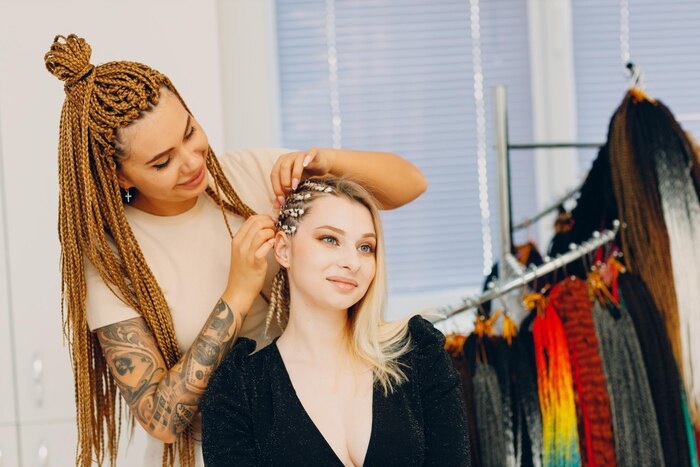

Cornrow twists and regular cornrows can create neat, protective, and versatile hairstyles. However, they do not produce the same finish. Their structure, texture, styling options, and maintenance needs can differ.
Clients exploring Cornrow Twist Hairstyle Services should understand those differences before booking. The right choice depends on your hair, routine, and preferred look.
What Are Cornrow Twists?
Cornrow twists combine scalp-based sections with twisted lengths or twisted design elements. The hair can begin close to the scalp before transitioning into twists. This creates more visible texture than standard braided rows.
Cornrow twist hairstyles can be simple or highly detailed. Some designs use straight-back sections. Others include curved parts, side patterns, or gathered ponytails.
Cornrow twist hairstyles can also include extension hair. Added hair may provide length, fullness, or color. Your stylist should choose a method that supports comfortable wear.
What Are Regular Cornrows?
Regular cornrows are braided directly along the scalp. Hair is gradually added into each row during braiding. The finished pattern can be straight, curved, geometric, or creative.
Cornrows usually keep more hair secured against the scalp. That can make them practical for clients wanting a compact style. They can also serve as a base for other protective looks.
Regular cornrows can use natural hair or extensions. The best option depends on desired length, thickness, and design.
Cornrow Twists vs. Cornrows: The Main Difference
The biggest difference is the visible structure. Cornrows remain braided through the designed section. Cornrow twists introduce a twisted texture into the finished style.
That difference changes movement and appearance. Cornrow twist hairstyles often feel softer through the loose lengths. Regular cornrows usually create a more structured scalp-focused finish.
Neither option is automatically better. The right choice depends on your priorities.
Which Style Offers More Versatility?
Cornrow twists can offer more movement when the ends remain free. Those lengths can be gathered into buns or ponytails. They can also be worn down.
Regular cornrows offer versatility through pattern design. Rows can curve, cross, or follow detailed parting. Accessories can also change the finished look.
Clients wanting texture may prefer cornrow twist hairstyles. Clients wanting a cleaner scalp pattern may prefer traditional cornrows.
Which Style Is Better for Natural Hair?
Both styles can reduce daily manipulation when installed thoughtfully. Protective styling should support the hair rather than strain it.
Hair condition matters before either service. Dry, tangled, or fragile hair may need careful preparation. Sensitive edges should never be treated like stronger areas.
Professional Cornrow Twist Hairstyle Services should account for density and scalp comfort. Section size and tension should suit the individual client.
Which Style Lasts Longer?
Wear time depends on installation, hair texture, activity, and maintenance. It also depends on the specific design chosen.
Regular cornrows may stay more compact because the hair remains braided closely. Cornrow twists can develop frizz through the twisted sections sooner. That does not mean the style has failed.
Night protection can help both styles. Use a satin bonnet, scarf, or pillowcase. Avoid repeated pulling into tight secondary styles.
Which Style Is Easier to Maintain?
Regular cornrows can be straightforward to manage because most hair stays secured. Scalp access may also be easier in simple patterns.
Cornrow twist hairstyles require attention to both roots and twisted lengths. Loose ends should be handled gently. Heavy products can make the style look dull.
For either option, keep the scalp clean and comfortable. Use lightweight products when moisture is needed. Avoid excessive buildup around the parts.
What About Installation Time?
Installation time depends on length, size, detail, and extension hair. A simple cornrow pattern may take less time than detailed twists.
Complex cornrow twist hairstyles can require careful transitions and finishing. Small sections also increase the amount of work.
Ask about expected appointment length before booking. This helps you choose a style that fits your schedule.
How Should You Choose?
Choose cornrow twist hairstyles if you want scalp detail with added texture. They suit clients who enjoy movement and flexible styling.
Choose regular cornrows if you prefer a compact, structured finish. They can work especially well for clean patterns and low daily manipulation.
Your decision should also consider scalp sensitivity, desired length, and maintenance habits. Reference photos can help communicate your preferred result.
Considering Cornrow Twist Hairstyle Services? Makoula African Hair Braiding can help plan your style.
Call (917) 519-2371 or (646) 294-7038 to discuss your preferred look.

