

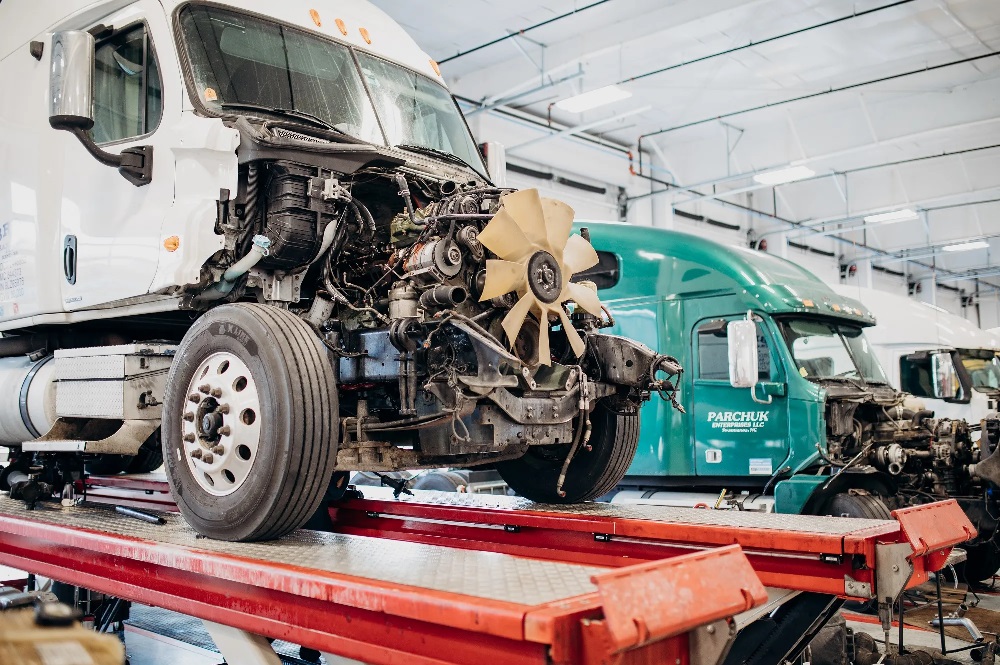

A Western Star pulling a loaded trailer across the Pilbara covers ground that would wear out a lighter truck in a fraction of the time. Heat, corrugated roads, and long haul distances between Newman and the surrounding mine sites all add up. Finding reliable Western Star truck repairs in Newman, WA before a fault turns into a breakdown keeps a haulage schedule intact. It stops one stranded load from turning into a lost day.
Why Western Star Trucks Suit Pilbara Conditions
Western Star trucks have built a reputation in Australian heavy haulage and mining transport. Operators value their strength under sustained load. Many running long-distance freight or site-to-site haulage in Western Australia favour the brand for its heavy-duty chassis and engine options. These trucks are built for exactly this kind of work.
That durability does not mean the trucks are maintenance-free. It means the components doing the work, brakes, suspension, cooling, and drivetrain, take a heavier and more constant beating. A truck running shorter, lighter routes elsewhere simply does not face the same load. On a Pilbara haul route, every one of those systems earns its keep every single day.
The Repairs That Come Up Most Often
A handful of repair categories account for most of the callouts on Western Star trucks working around Newman. Cooling system faults are common. A truck hauling heavy freight in high ambient temperatures asks a lot of the radiator and its hoses. A slow coolant leak barely registers on a lighter vehicle. On a loaded truck climbing a grade, the same leak can push engine temperature into a danger zone quickly.
Brake wear is another frequent issue. Heavy loads and long descents put real strain on braking systems. Western Star trucks running mine-adjacent routes often need brake inspections more often than the standard interval suggests. Suspension components wear faster too. Unsealed roads and corrugated site access tracks put extra load on bushes, shocks, and mounting points with every kilometre.
Electrical faults round out the list. A truck built with multiple onboard systems, lighting, telematics, communications, and engine management, has more points where a connector can corrode or a wire can chafe. Dust ingress into connectors is a genuine problem on a working Pilbara truck. It often shows up first as an intermittent fault that is hard to pin down without a proper diagnostic check.
What Happens When These Faults Are Left Unchecked
A minor coolant leak left alone rarely stays minor. It usually widens into a hose failure at the worst possible time, often on a loaded climb where overheating does the most damage to the engine. A brake pad ignored past its wear indicator behaves the same way. It works fine until the exact moment it does not. That moment tends to arrive on a descent rather than a straight, flat stretch of road.
Electrical faults follow a similar pattern. A connector with early corrosion might cause an occasional flicker in a light or a sensor reading today. Left long enough, the same corrosion spreads and the fault becomes constant, sometimes taking a whole system down with it. Catching each of these problems early is almost always cheaper and faster than waiting for the failure itself.
Signs a Western Star Needs Attention Soon
A few warning signs are worth acting on immediately rather than waiting for the next scheduled service.
- Rising engine temperature on grades that never used to cause it
- A brake pedal that feels softer or needs more travel than usual
- Visible fluid under the truck after it has been parked overnight
- Warning lights that clear on reset but return within a day or two
- A new vibration or noise from the suspension over rough ground
Any one of these signs on its own is worth a check. Two or more appearing together usually means the underlying issue is further along than it first looks.
Why Local, Mobile Repair Matters for a Working Truck
A Western Star sitting idle costs money every hour it is not moving freight. Sending a truck to a distant workshop adds transport time on top of the actual repair. That turns a short job into a multi-day delay. Providers offering Western Star truck repairs in Newman, WA, including operators such as G Auto Electric & Air Con, can often diagnose and fix common faults at the depot instead. On-site work is often possible too. That keeps the truck closer to its route and cuts the downtime a distant workshop visit would add.
Working on-site does have limits. A major driveline repair, or a job that needs a hoist and a controlled workshop environment, still belongs in a proper facility. The value of a local, mobile provider is in handling the common faults quickly. Brakes, cooling, electrical, and general mechanical work all fall into that category. Fixing them close to where the truck actually operates saves real time.
Sourcing Parts for a Remote Repair
Parts availability is a real factor in a town the size of Newman. A common wear item, a brake pad or a belt, is usually easy to source locally or have freighted in quickly. A less common part, such as a specific sensor or a driveline component, can take longer to arrive. A repairer who understands this reality works differently. They diagnose the fault, confirm exactly which part is needed, and order it immediately. That avoids a second visit just to work out what is actually wrong.
This is one reason a proper diagnostic check earns its cost. Guessing at a part and ordering the wrong one wastes freight time that a remote operation genuinely cannot spare. Confirming the fault first, then ordering the correct part once, keeps the truck’s time off the road as short as it can reasonably be.
What a Good Inspection Covers
A thorough inspection on a Western Star working heavy routes goes beyond a quick visual check. A mechanic will typically check coolant condition and hose integrity. Brake pad and rotor wear get checked next, along with suspension bushings and mounting points. Battery and charging system performance rounds out the physical inspection. Onboard diagnostic systems get scanned for stored fault codes too. A code that has not yet triggered a warning light can still point to a developing problem.
Catching a fault at this stage, rather than after it causes a breakdown, is the entire point of a scheduled inspection. A brake pad close to its wear limit is a straightforward, planned replacement. The same pad worn past its limit on a loaded descent is a very different, much more dangerous situation.
Building a Realistic Service Routine
A Western Star running consistent Pilbara routes benefits from a service interval shorter than the manufacturer’s general recommendation. This matters most for filters, coolant, and brake components exposed to dust and heat. Operators who track hours and kilometres against actual fault history tend to catch problems earlier. They also tend to spend less on major repairs over the life of the truck than operators following a generic calendar alone.
A simple log helps here too. Noting a strange noise, a slower brake response, or a warning light the day it appears gives a mechanic a clear starting point at the next service. A vague description offered weeks after the fact gives the mechanic far less to work with.
Choosing a Repairer Who Knows Heavy Trucks
Not every mechanic who services light vehicles is set up for a fully loaded Western Star. Heavy truck brakes, suspension, and electrical systems differ enough from a car or a ute that experience matters. A repairer who works regularly on trucks and heavy equipment around Newman generally has a better feel for the specific wear patterns these vehicles show. They also tend to understand how Pilbara conditions accelerate that wear.
Keeping the Truck Moving
None of this is about treating a Western Star as fragile. It is a genuinely durable truck built for heavy work. Reliable Western Star truck repairs in Newman, WA come down to catching the predictable wear points before they turn into a roadside breakdown. Cooling, brakes, suspension, and electrical systems are the ones that matter most. A truck maintained this way keeps its schedule, keeps its freight moving, and avoids the far higher cost of unplanned downtime on a remote haul route.