

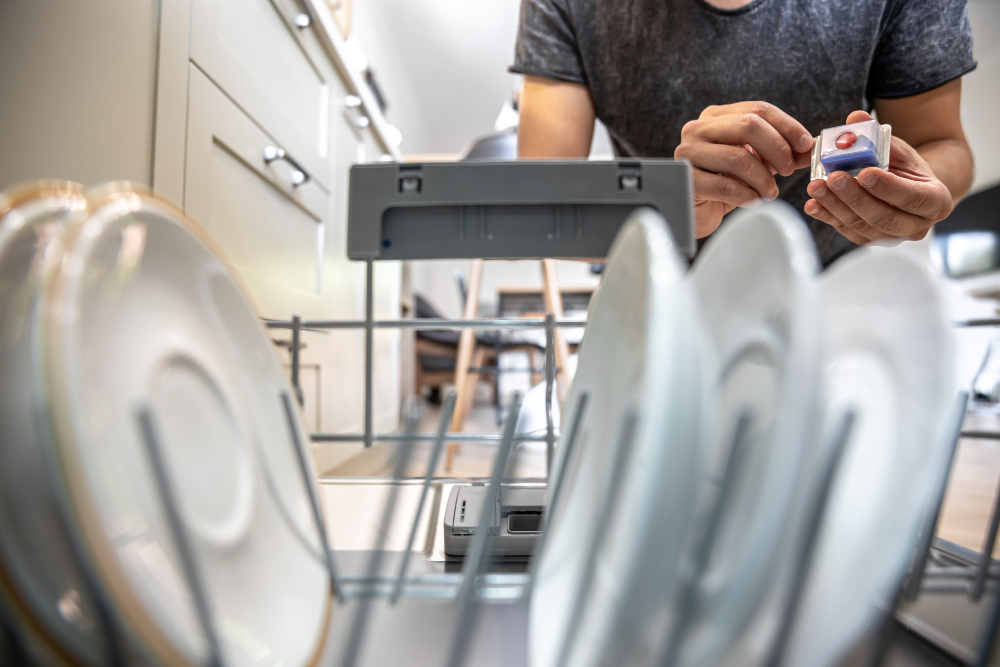

A dishwasher can complete most of its cycle and still leave a problem behind.
You may find water at the bottom of the tub. A puddle may appear near the door. The cabinets beside the appliance may feel damp.
These symptoms should not be ignored.
A drainage problem can leave dirty water inside the dishwasher. A leak can damage flooring, cabinetry and electrical connections.
This guide explains the common causes of a dishwasher not draining in Surrey homes. It also covers likely reasons for a dishwasher leaking in Surrey and when professional diagnosis is needed.
Quick Answer: Why Is My Dishwasher Not Draining or Leaking?
A dishwasher may not drain because of:
- A dirty or blocked filter
- A kinked drain hose
- A blocked sink connection
- A disposer knockout plug left in place
- A restricted air gap
- A damaged drain pump
- A control or wiring problem
A dishwasher may leak because of:
- Too much detergent
- The wrong type of detergent
- A damaged door gasket
- A loose water connection
- A leaking inlet valve
- A cracked hose
- A worn pump seal
- An overfill condition
- An unlevel installation
Start with visible and accessible checks. Stop using the dishwasher if water reaches wiring, an outlet or the area beneath the appliance.
Is a Small Amount of Water Normal?
A small amount of clean water near the filter may be normal on some dishwasher models.
A large pool of dirty water is different.
Standing water becomes a concern when:
- It covers much of the filter area
- It remains after every cycle
- It has a strong odour
- Food debris floats in it
- The dishwasher displays a drain error
- Water returns after being removed
Maytag advises that an inch or more of standing water can indicate a clogged dishwasher. Its guidance also identifies the filter, drain hose and drain motor as possible causes.
Check the owner’s manual before removing any filter. Filter design and access vary by model.
Why Is My Dishwasher Not Draining?
1. The Dishwasher Filter Is Blocked
The filter catches food particles and debris before they reach the drainage system.
Over time, it may become covered with:
- Food scraps
- Paper labels
- Broken glass
- Grease
- Mineral deposits
- Small pieces of plastic
A clogged filter can slow drainage. It may also reduce cleaning performance.
Remove and clean the filter only when the manufacturer’s instructions allow it. Rinse it under running water. Use a soft brush for stubborn debris.
Do not use a wire brush. It can damage the filter material.
Maytag’s model-aware guidance recommends consulting the use-and-care instructions before removing the filter. It also notes that filters are commonly located at the bottom of the tub or near the lower spray arm.
2. The Drain Hose Is Kinked or Restricted
The drain hose carries wastewater from the dishwasher to the sink plumbing or disposer.
A restriction may occur when the hose is:
- Bent behind the appliance
- Crushed during installation
- Clogged with debris
- Installed at the wrong height
- Connected incorrectly
- Damaged internally
You may be able to inspect the visible section beneath the sink.
Do not pull the dishwasher from the cabinet unless you can do so safely. Hidden hoses and electrical connections may be disturbed.
3. The Sink Drain or Disposer Is Blocked
The dishwasher may be working correctly while the connected plumbing is blocked.
Run water through the kitchen sink. Check whether it drains slowly.
When a dishwasher is connected to a recently installed food-waste disposer, the disposer’s knockout plug must be removed. If it remains in place, the dishwasher cannot drain through that connection.
Official Whirlpool troubleshooting for a dishwasher F9E1 long-drain condition recommends checking the filter, drain hose, disposer connection and air gap where fitted.
4. The Air Gap Is Blocked
Some dishwasher installations use an air gap near the sink.
Its purpose is to help prevent wastewater from flowing back into the dishwasher.
Food debris or buildup can restrict the air gap. This may cause:
- Slow drainage
- Water backing up
- Water appearing near the sink
- A drain-related error
Follow the manufacturer’s cleaning instructions. Do not dismantle plumbing connections unless you understand the installation.
5. The Drain Pump Is Damaged
The drain pump moves wastewater out of the tub.
Possible signs of a pump problem include:
- Humming without drainage
- Grinding during the drain stage
- Water remaining after every cycle
- A recurring drain error
- No pump sound at all
A foreign object may be obstructing the pump. The motor itself may also have failed.
Pump testing normally requires access to internal or lower components. This should be handled by a technician.
6. The Dishwasher Control Is Not Completing the Drain Cycle
The drainage system depends on switches, sensors, wiring and electronic controls.
A control-related problem may cause the dishwasher to:
- Stop before draining
- Drain only sometimes
- Display a recurring error
- Become unresponsive
- Restart the same stage repeatedly
A power reset may clear a temporary control fault. Follow the model’s manual.
If the problem returns, the underlying fault still needs diagnosis.
Why Is My Dishwasher Leaking?
1. The Wrong Detergent Was Used
Ordinary hand-washing liquid should never be used in a dishwasher.
It creates excessive foam.
The foam can push water through the door area and onto the floor. Too much automatic dishwasher detergent can also create oversudsing on some models.
Whirlpool identifies wrong or excessive detergent as a possible cause of dishwasher leakage and poor wash performance.
Use only detergent labelled for automatic dishwashers.
2. The Door Gasket Is Dirty or Damaged
The gasket creates a seal around the dishwasher door.
A leak may occur when the gasket is:
- Torn
- Flattened
- Hardened
- Loose
- Covered with food residue
- Prevented from sealing by a dish or utensil
Clean the gasket gently.
Check whether a rack, pan handle or utensil is preventing the door from closing.
A gasket may need replacement when it no longer sits evenly in its channel.
3. The Dishwasher Is Not Level
An unlevel dishwasher may direct water toward one side of the door.
Possible signs include:
- Water leaking from a front corner
- The door not closing squarely
- Racks rolling in or out by themselves
- Uneven gaps around the door
Whirlpool’s leak guidance lists appliance levelling as one of the checks that may help with front-door leakage.
Levelling should be completed according to the installation instructions.
4. A Spray Arm Is Blocked or Damaged
A spray arm directs water around the dishwasher.
A large item may prevent it from turning. A split or damaged spray arm may send water directly toward the door seal.
Before starting a cycle:
- Turn each accessible spray arm by hand
- Check for dishes blocking movement
- Look for visible cracks
- Confirm that racks are installed correctly
Do not operate the dishwasher with a visibly broken spray arm.
5. The Water Inlet Valve or Supply Line Is Leaking
The inlet valve controls water entering the dishwasher.
A leak may occur at:
- The household shutoff valve
- The supply hose
- A hose fitting
- The inlet valve
- An internal water line
A supply-side leak may continue even when the dishwasher is not running.
Turn off the dishwasher’s water supply if the leak is active.
6. The Dishwasher Is Overfilling
The appliance uses a float, sensor or pressure system to control the water level.
An overfill problem may involve:
- A stuck float
- A faulty float switch
- A damaged inlet valve
- Incorrect sensor readings
- A control fault
Do not continue operating a dishwasher that fills beyond its normal level.
7. A Pump Seal, Hose or Tub Is Damaged
Water beneath the centre of the dishwasher may come from:
- A pump seal
- A circulation assembly
- An internal hose
- The sump
- A cracked tub
These parts are usually hidden.
A technician may need to run the dishwasher while inspecting the lower components.
The Timing of the Leak Can Help
Note when water appears.
Leak During Filling
Possible causes include:
- Supply-line leakage
- Inlet-valve problems
- Overfilling
- A loose internal connection
Leak During Washing
Possible causes include:
- A damaged door gasket
- A split spray arm
- Excess detergent
- A pump or sump leak
Leak During Draining
Possible causes include:
- A loose drain hose
- A blocked sink connection
- A cracked drain hose
- A leaking drain pump
Leak When the Dishwasher Is Off
Possible causes include:
- A water-supply connection
- A valve that does not close
- Water travelling from nearby plumbing
This information can make dishwasher repair in Surrey more efficient.
Safe Checks Before Calling a Technician
Before scheduling service:
- Turn off the dishwasher
- Check the filter
- Inspect the visible drain hose
- Confirm that the sink drains
- Check the disposer connection
- Use only dishwasher detergent
- Make sure spray arms can turn
- Check that the door closes fully
- Look for visible gasket damage
- Record any error code
- Note when the leak begins
Do not remove lower electrical panels while the dishwasher is connected to power.
When to Stop Using the Dishwasher
Stop using it when:
- Water reaches an outlet or wiring
- The leak spreads beneath cabinets
- The breaker trips
- The appliance smells like burning
- The dishwasher overfills
- The pump makes severe grinding sounds
- Water continues entering when the appliance is off
- A hose or valve is visibly damaged
Turn off the electrical circuit and water supply when it is safe to do so.
Repair or Replace the Dishwasher?
Consider:
- Appliance age
- Repair history
- Overall condition
- Repair cost
- Parts availability
- Condition of the racks and tub
- Cleaning performance
- Replacement cost
A filter, hose, valve or gasket problem may be practical to repair.
A cracked tub or multiple major failures may justify replacement.
The technician should explain whether the fault is isolated.
How to Choose Dishwasher Repair in Surrey
When searching for dishwasher repair near Surrey, ask:
- Do you repair my dishwasher brand?
- What is the diagnostic fee?
- Will the dishwasher be tested during a cycle?
- Will I receive a written estimate?
- Are parts available for my model?
- What warranty applies?
- Is the warranty provided in writing?
- Do you serve my Surrey neighbourhood?
The right provider should diagnose the source before recommending parts.
Need Dishwasher Repair in Surrey?
AMP Appliance Repair provides dishwasher diagnosis and repair services in Surrey.
When booking, provide the brand, model number, error code and a description of the problem. Explain whether the dishwasher is not draining, leaking or doing both.
Contact AMP Appliance Repair to schedule dishwasher repair in Surrey.
Frequently Asked Questions
Why is there water at the bottom of my dishwasher?
A small amount may be normal on some models. A larger pool can indicate a blocked filter, restricted hose, plumbing problem or damaged drain pump.
Can I run a dishwasher that is leaking slightly?
It is safer to stop using it until the source is identified. A small visible leak may spread beneath the flooring or cabinets.
Can too much detergent make a dishwasher leak?
Yes. Excess foam can push water through the door area. Use only the recommended amount of automatic dishwasher detergent.
Why does my dishwasher leak only while draining?
The drain hose, pump, sink connection or disposer connection may be leaking or restricted.
Should I clean the dishwasher filter?
Clean it only according to the instructions for your model. Some filters are removable. Other filtration systems are designed differently.
How do I find dishwasher repair near me in Surrey?
Compare brand experience, diagnostic procedures, written estimates, warranty terms and local service coverage.