

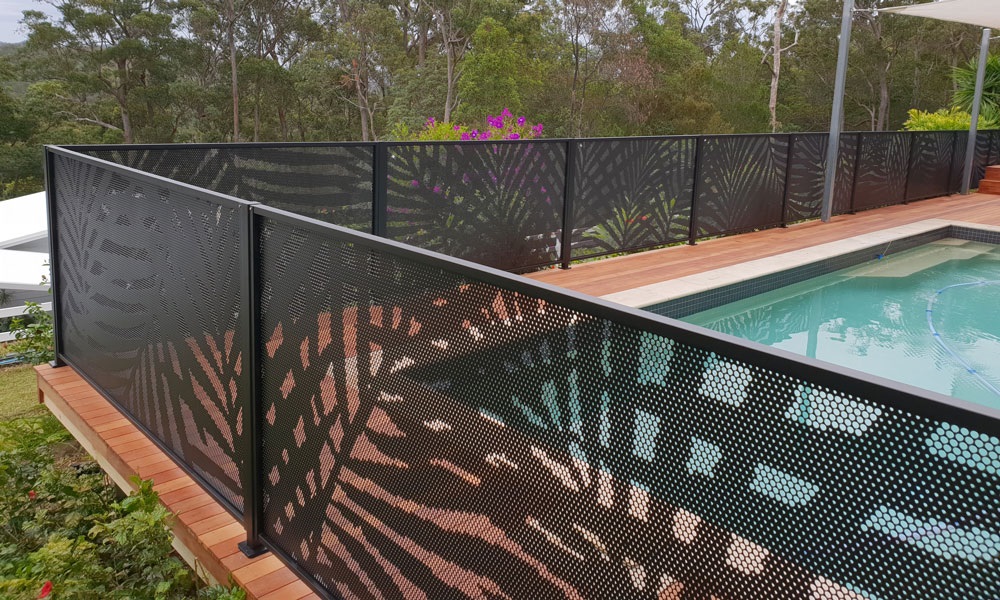

A backyard pool is only as safe as the fence around it. That detail gets lost the moment someone types pool fencing near me into a search bar and clicks the first result. Compliance, not proximity, should decide who gets the job. Western Australia’s pool safety rules are specific about barrier height, climbable gaps, and self-closing gates, and not every fencing business treats them the same way. Before you sign a quote, it helps to know exactly what separates a properly installed pool fence from one that looks fine but fails an inspection.
Here are seven things worth checking before you commit to any local installer.
1. Confirm the Fence Meets Australian Pool Safety Standards
Every private pool barrier in Australia has to meet AS1926.1, the standard that sets minimum fence height, maximum gap sizes, and gate hardware rules. A compliant fence stands at least 1200mm tall, with no gap larger than 100mm anywhere along its base or between vertical members. Horizontal rails also can’t create a foothold a child could climb. Ask any installer to state, in plain terms, which parts of the standard their fence design satisfies. A vague answer is a warning sign.
Non-compliant barriers aren’t just a safety risk. A council can issue a notice requiring the fence to be rebuilt. Home insurance claims involving a pool incident can also be affected if the barrier didn’t meet the required standard at the time. Getting this right the first time avoids both problems.
2. Ask Which Materials Actually Suit Your Yard
Glass and aluminium dominate the pool fencing market for good reason, but they solve different problems. Frameless and semi-frameless glass panels give an unobstructed view of the pool, which matters most for families supervising young children from indoors. Toughened safety glass is the standard here, since it needs to withstand impact without shattering into sharp pieces. Aluminium pool fencing costs less upfront, resists corrosion in coastal air, and needs almost no upkeep beyond an occasional wash. Neither option is universally better. The right choice depends on your budget, your view priorities, and how much maintenance you’re willing to do.This kind of side-by-side comparison is worth doing before you request quotes. A fence that looks better in a photo isn’t automatically the one that suits your yard, your climate exposure, and your maintenance routine.
3. Check How Local the Installer Actually Is
This is the part a “near me” search is supposed to answer, and it’s worth verifying rather than assuming. A genuinely local installer knows which suburbs fall under which council, because pool barrier inspection requirements can differ slightly from one WA local government area to the next. They also understand how Perth’s climate affects material choice: strong afternoon winds, high UV exposure, and salt air near the coast all shorten the lifespan of poorly specified hardware. A business that regularly works across suburbs like Ballajura, Bayswater, Morley, and Kelmscott will have already solved problems a fly-in installer hasn’t encountered yet. It’s also worth asking two separate questions: how quickly they can get someone out for a site inspection, and how quickly they can start the actual installation. Those two timeframes are often different, and both affect how soon your pool can be used.
4. Look Closely at the Installation Process Itself
A proper pool fencing job follows a consistent sequence. Most installations take one to two days depending on fence length and site access.
- Site inspection to assess ground conditions and yard layout
- Fence selection based on that assessment
- Physical installation of panels, posts, and gates
- Final compliance check before the barrier is signed off
Some Perth pool fencing providers, including Straight Up Retaining Fencing & Earthworks, lay this process out clearly on their website. Checking that page before you book lets you compare what’s actually included against what a quote promises. That kind of detail is worth checking on any pool fencing near me shortlist, because not every listing explains what happens on-site once the crew arrives.
5. Review Warranty and Maintenance Expectations
Glass panels need regular cleaning to stay clear, and hard water spots or pool chemical residue can build up faster than people expect. Aluminium needs far less attention but isn’t maintenance-free either; hinges and latches still wear over time. Ask what warranty covers the fence itself versus the hardware, and how long that cover lasts. A one-year warranty on gate hinges is a different promise than a ten-year warranty on the panels, and reputable installers will explain the difference without being asked twice.
6. Ask About Gate Hardware Specifically
Most pool fence compliance failures come down to the gate, not the panels. A self-closing hinge has to return the gate to a fully closed position from any angle, and a self-latching mechanism has to engage without anyone touching it. Cheap hardware can stick, especially after exposure to sun and dust, which turns a compliant fence into a non-compliant one within months. Ask how the hardware is tested and whether it’s rated for outdoor use in WA conditions specifically. It also helps to ask what happens if a hinge or latch fails within the first year. Replacement hardware is a small job on its own, but it’s a frustrating one to chase up if the original installer is hard to reach.
7. Get the Final Compliance Certificate in Writing
Many WA councils require a documented pool safety inspection before a new barrier can be used, and some require ongoing re-inspection every four years. A verbal assurance that “it’s all compliant” isn’t the same as a signed certificate you can produce if a council inspector asks for one. Confirm, before work starts, whether the installer arranges this inspection or whether it’s left to you to organise separately. If re-inspection is required down the track, ask who is responsible for booking it. A missed re-inspection date can leave a pool technically non-compliant even if nothing about the fence has actually changed.
8. Ask How They Handle Sloped or Paved Yards
Perth’s older suburbs have plenty of yards with uneven ground, existing paving, or timber decking right up against the pool edge. A fence that installs cleanly on flat lawn can need a completely different footing approach on a slope or a raised deck. Ask whether the installer has handled your specific site type before, and whether extra footing work or custom panel cutting is likely to add time or cost. This is one of the easiest details to overlook when comparing quotes, since most quotes are based on a standard site until someone actually inspects the yard.
9. Compare At Least Two Written Quotes
A phone estimate isn’t the same as a written quote, and the gap between the two is where unexpected costs usually hide. A proper written quote should list the fence length, panel type, gate count, hardware brand, and whether the compliance inspection and certificate are included in the price or billed separately. Getting two or three quotes in this format makes it far easier to compare like for like, rather than comparing a rough number against a detailed one.
What This Means for Your Search
Searching pool fencing near me is really just the first step in a longer process than most homeowners expect. Proximity gets you a shortlist, but compliance, materials, warranty terms, and paperwork are what actually determine whether the fence keeps your family safe and keeps you on the right side of WA law. Compare a few local installers against the checklist above, ask each one the same questions, and treat the compliance certificate as seriously as the fence itself. A pool barrier that’s easy to forget about is usually the one that was done properly the first time.
Keep a copy of the compliance certificate, the warranty details, and the quote together once the job is done. If you ever sell the property, buyers and their inspectors will want to see exactly that paperwork, and having it ready saves a scramble later.