

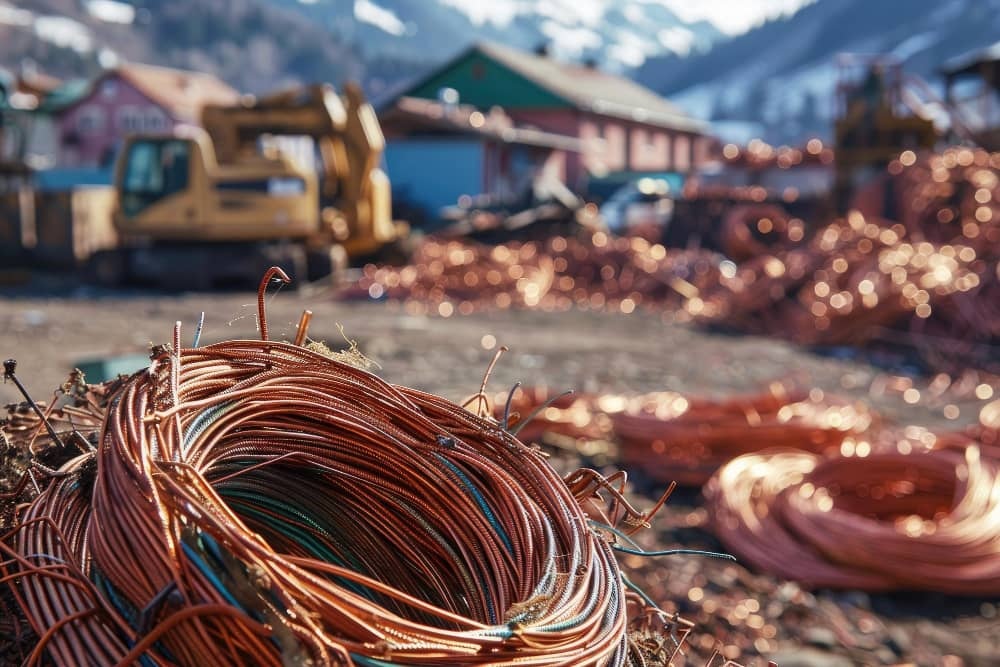

Old copper wire, pipe, and fittings do not become useful again on their own. Somebody has to sort it, strip it, melt it down, and purify it before it can go back into a new product. That work is what copper recovery services in Melbourne actually provide. Understanding each stage helps explain why the price offered for scrap varies so much between a clean load and a messy one.
Recovery Starts With Collection
The process begins with the scrap itself arriving at the yard. It can come from an electrician clearing offcuts on a job. It can come from a renovation pulling old wiring out of a wall. It can come from a demolition site stripping cable before a building comes down. Recovery services take in material from all of these sources. Household amounts and industrial loads both go through the same basic path. They simply move through it at very different volumes.
Sorting and Preparation Come Next
Once the material arrives, it gets sorted by type and grade. Bare, uninsulated wire is separated from insulated cable. Pipe, fittings, and motor windings get grouped separately again, since each requires different handling. Non-copper contamination, such as plastic ties or steel brackets, gets pulled out at this stage too. This step matters because it sets up everything that follows. A poorly sorted load slows down the whole recovery process. It also lowers the price paid for the material once it is finally graded. Time spent separating materials at the yard gets reflected in a lower blended rate for the whole load.
Smelting Separates Copper From Everything Else
Smelting is where the real transformation happens. The sorted material gets heated to a high temperature, hot enough to melt the copper and separate it from remaining contaminants. Insulation burns or breaks away during this stage. Other metals separate out too, based on their different melting points. What comes out of smelting is a much purer form of copper than what went in. It is still not yet pure enough for many manufacturing uses, though, which is why a further stage follows.
Electrolytic Refining Reaches Industrial Purity
After smelting, copper often still contains trace impurities. Those impurities affect how well it performs in demanding applications. Electrolytic refining removes them. The copper gets treated using an electric current that draws pure copper onto a cathode, leaving remaining impurities behind in the process. This step is what allows recovery services to produce industrial-grade copper. That grade suits wiring, plumbing, and manufacturing, rather than sitting as a rough intermediate product nobody can use directly.
Why This Process Takes Different Amounts of Time
A small load of clean bare wire moves through recovery quickly. It can often be assessed and paid out within the same visit. A large industrial batch takes longer. So does any load with a lot of contamination, since more sorting and processing has to happen first. This is a genuine part of how copper recovery services in Melbourne operate. It is not a delay tactic used to stall on payment. A straightforward provider explains roughly how long your specific load will take. That estimate should be based on its size and condition, not a vague guess.
What Determines the Price You Get Paid
Four factors drive the final price: purity, quantity, sorting, and the day’s market rate. Bare bright wire close to 99.9 percent purity earns the most, since it needs no further separation. Larger, well-sorted loads are generally more efficient to process than small mixed ones. Copper trades on a global commodity market that shifts daily. The same load can be worth a different amount depending on when it actually gets weighed. A transparent provider explains how each factor applies to your specific material before finalising a number.
Why Bare Wire and Mixed Scrap Take Different Paths
Not all copper scrap enters this process at the same point. Bare bright wire, often called millberry, already sits close to 99.9 percent purity. It can skip much of the sorting and contamination removal that mixed scrap needs. Insulated cable, motor windings, and pipe with fittings still attached need more work before they reach the smelting stage. That extra handling is not wasted effort. It is what turns scrap with real but uncertain value into a graded, priceable load.
What Happens to the Recovered Copper Afterward
Once copper reaches an industrial-grade purity, it does not sit idle. It gets sold on to manufacturers who use it in new wiring, plumbing components, electronics, and countless other products. Copper does not lose its physical properties through this cycle. A recovered, refined batch performs identically to copper freshly mined and refined from ore. That is a major reason recovery is worth doing at scale, rather than treating old copper as waste with no further use.
Why Recovery Matters for a City Like Melbourne
Construction, renovation, and demolition work generate a steady stream of copper scrap across Melbourne every year. Mining and refining new copper from ore uses far more energy than reprocessing material that has already been through that step once. Recovery services keep that material moving back into productive use. It stays out of landfill, where it would otherwise serve no purpose at all. That is a genuine benefit alongside the direct payment sellers receive for handing over their scrap. Neither outcome depends on the seller thinking about the environmental side at all. A fair payment and less landfill waste happen together, as a normal result of the same process.
Common Signs a Provider Skips the Real Recovery Work
A few patterns suggest a buyer is not actually recovering copper, just moving it on. A single flat rate offered regardless of grade or purity is one sign. An inability to describe smelting or refining in any real detail is another. So is reluctance to explain how the current market rate applies to your specific load. None of these signs proves anything on their own. Together, though, they paint a picture worth paying attention to before you commit to a price.
What to Ask Before Choosing a Recovery Service
A few direct questions separate a genuine recovery operation from a yard that simply weighs and moves material on. Ask how they grade material before quoting a price. Ask whether they can describe the smelting and refining stages in plain terms. Ask how payment timing works, and whether they pay on the spot once weighing is confirmed. Ask what happens to mixed or contaminated loads specifically, rather than assuming every load gets treated the same way. A provider willing to answer clearly, without vague reassurances, is generally the one worth using for a job of any size.
Household Amounts Still Go Through the Same Steps
It is easy to assume recovery services only matter for large industrial jobs, but that is not the case. A single old appliance can turn up a few kilos of copper wire. So can a small rewiring job or a garage clean-out, and it is worth setting that wire aside rather than binning it. That amount still gets sorted, weighed, and priced the same way a much larger load would be. The process just moves faster, since there is far less material to work through.
How This Differs From a Simple Scrap Sale
Selling a small amount of clean copper to a nearby buyer can be a quick, simple transaction. That is perfectly fine for a household amount. A genuine recovery service does more than take that transaction at face value. It treats each load as material heading toward an industrial-grade product, not just a number on a docket. That distinction becomes more important as the volume grows. A poorly handled industrial load wastes far more value than a poorly handled household one ever could.
The Bottom Line on Copper Recovery Services in Melbourne
Copper recovery services in Melbourne do more than collect scrap and hand over cash. Proper recovery involves sorting, smelting, and refining the material until it reaches a purity manufacturers can actually use. Understanding that process explains why price varies so much between a clean, sorted load and a mixed, contaminated one. It also gives sellers a clearer sense of what a fair transaction should look like from start to finish.